How to Eat Healthy When Eating Out: Simple Swaps & Tips | Trainer.sg
How to Eat Healthy When Eating Out: A Practical Guide
Restaurant and takeaway meals do not have to derail your goals. Use a simple plate method, order protein first, make smart swaps, manage portions and log meals out to fit them into your calorie target.
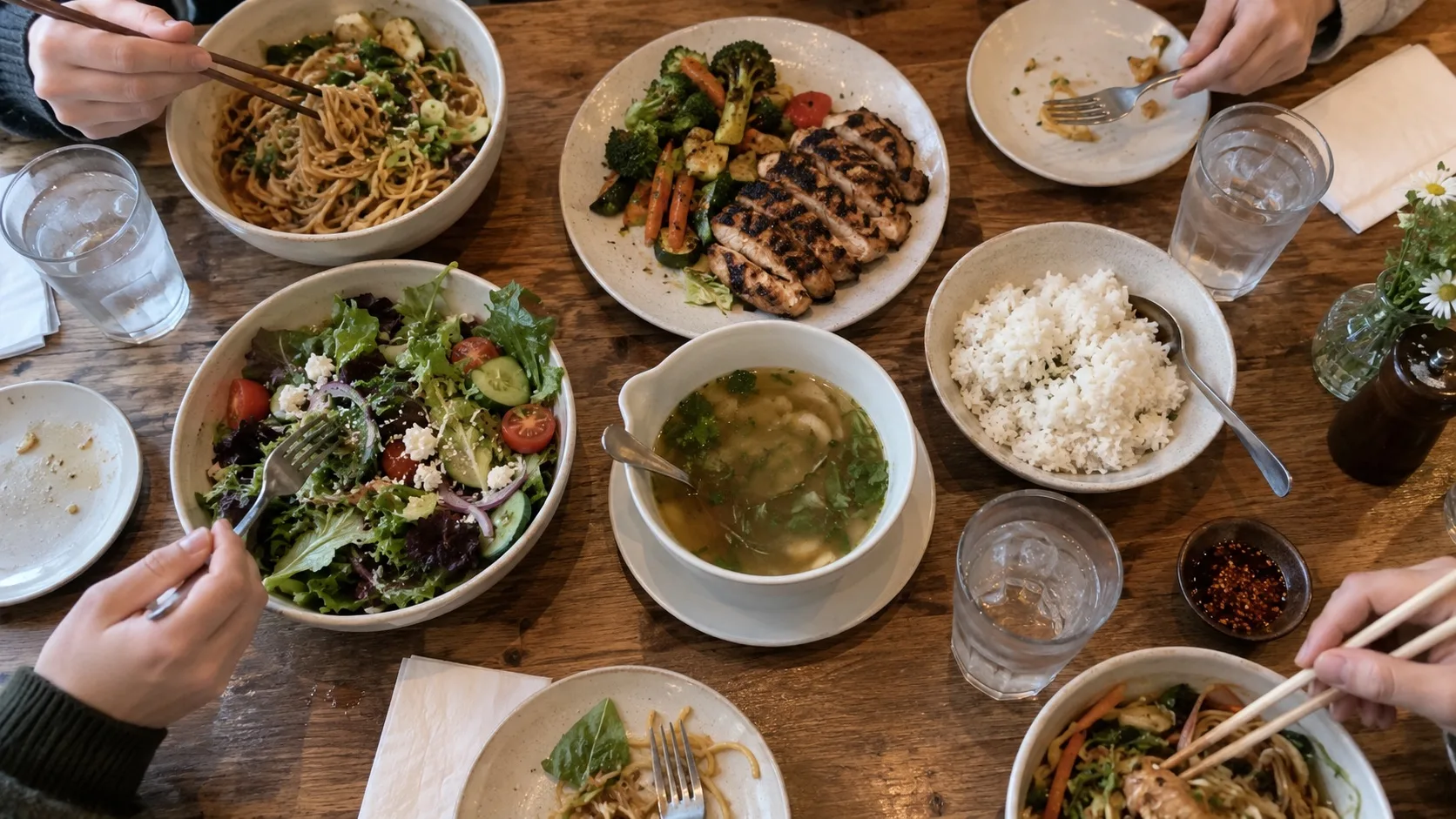
Knowing how to eat healthy when eating out matters more than most diet advice admits. Lunch from the place near work, dinner with friends, a coffee on the way in, takeaway on a tired Thursday: for a lot of people, that is most of the week. If your plan only works when you cook every meal yourself, it is not going to last.
The good news is that you do not need to avoid restaurants, order plain salads or quiz the waiter about every ingredient. A handful of simple habits will get you most of the way, whatever the cuisine. This guide covers why meals out tend to run high in calories, a plate method that works anywhere, what to order, easy swaps, portion tricks, how to log what you ate, and how to fit it all into a calorie target.
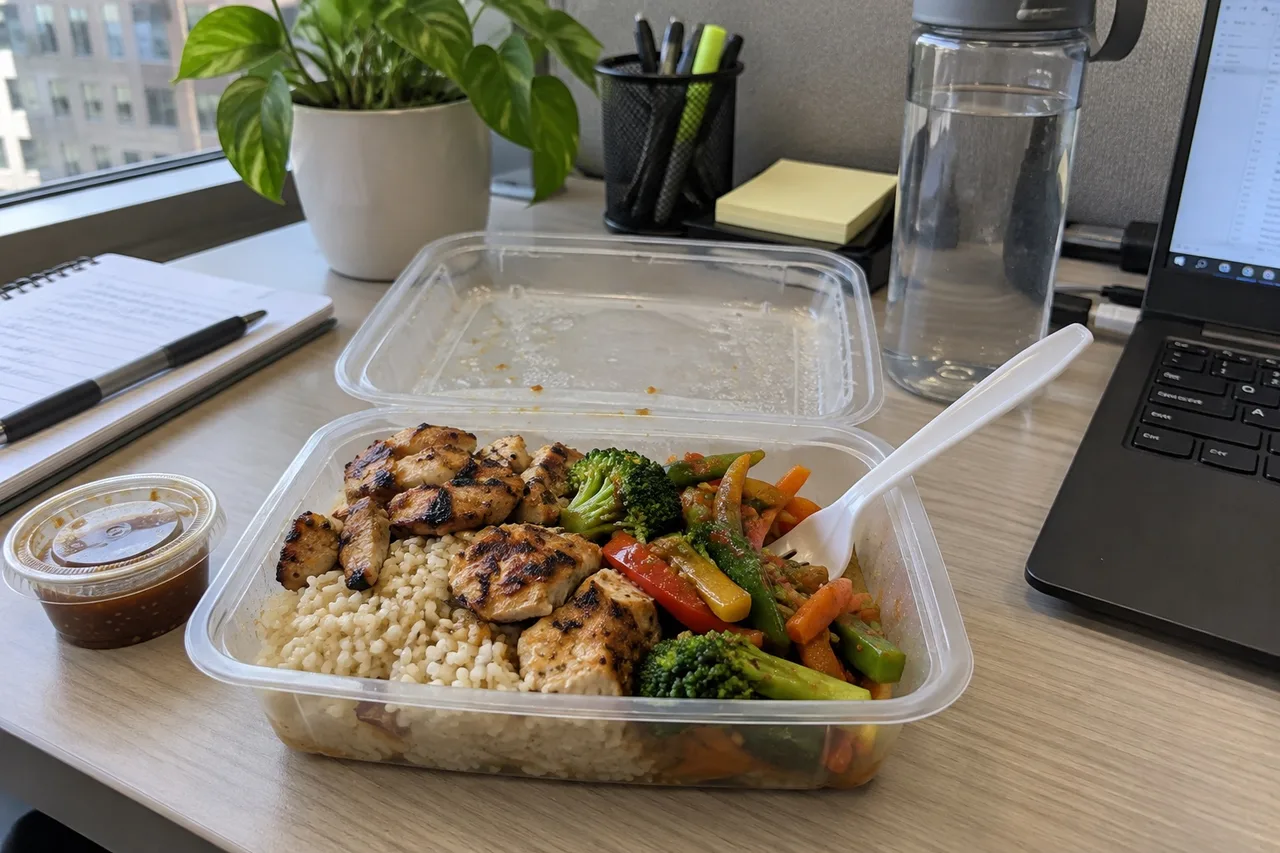
An ordinary takeaway lunch. Small choices in meals like this add up over a week.
Why restaurant and takeaway meals run high in calories
Meals out are not unhealthy by nature. They are just built to taste great and feel generous, and the things that make food taste great tend to be calorie-dense. The usual culprits:
Cooking oil and butter. Restaurant kitchens use more fat than most home cooks. A single tablespoon of oil is roughly 120 calories, and stir-fries, fried rice, sautéed vegetables and pan-fried meat can easily absorb several.
Sauces and dressings. Creamy sauces, mayonnaise-based dressings, gravies and sweet glazes can add a few hundred calories without making the plate look any bigger.
Portion size. Restaurant portions are often larger than what you would serve yourself at home, and you tend to finish what is in front of you.
Extras. Bread baskets, chips, sides, starters and shared desserts arrive on top of the main meal.
Drinks. Soft drinks, juices, sweetened coffees and alcohol are easy to forget, but they can add as many calories as a small meal.
None of this means you need to avoid these things. It means that if eating out happens often, a few of these levers are where the biggest wins are.
How to eat healthy when eating out: the simple plate method
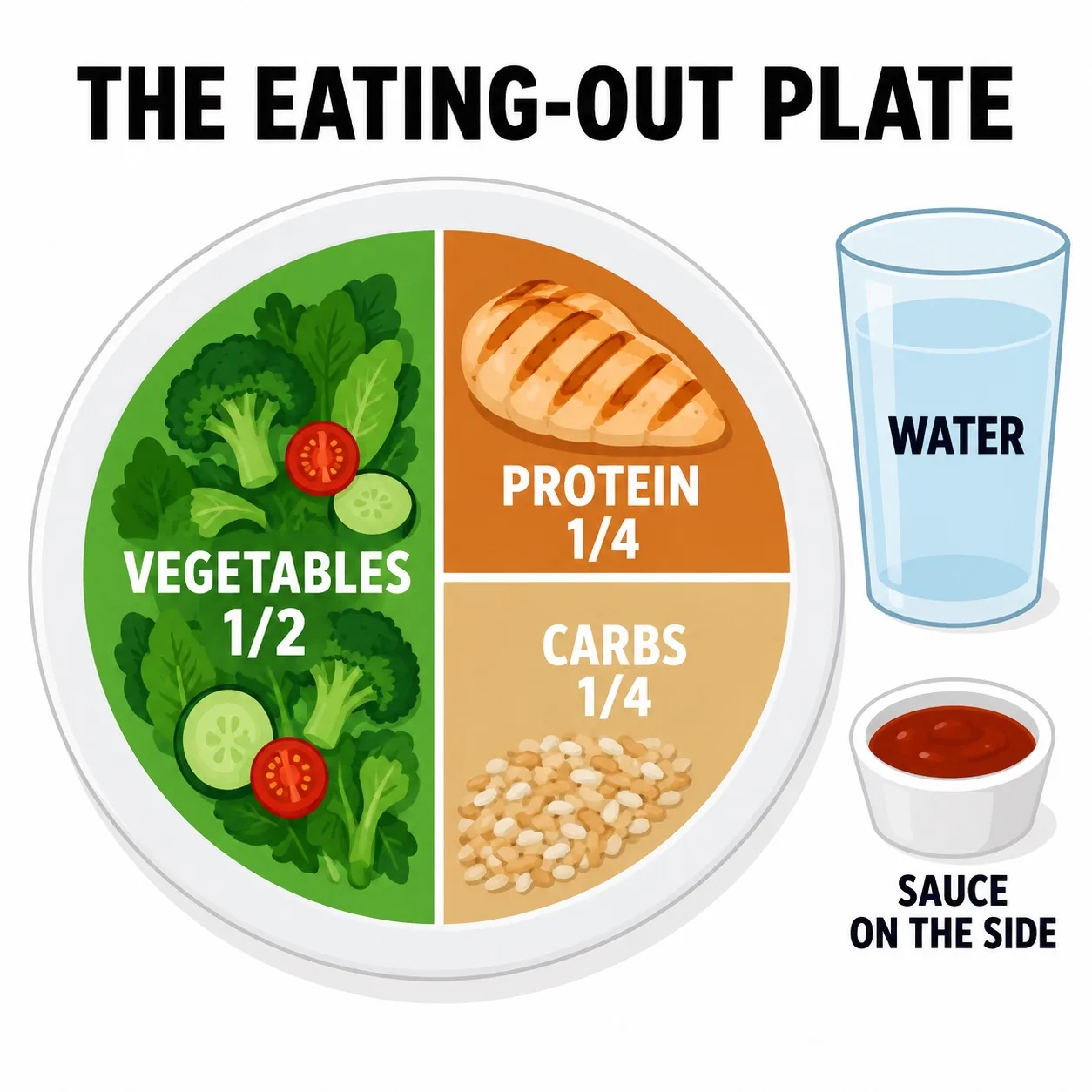
The easiest way to build a balanced meal at any restaurant is the plate method, a common guideline used by dietitians and public health bodies. Picture your plate split into sections:
About half: vegetables or salad. Fibre and volume for very few calories, so you feel full.
About a quarter: protein. Chicken, fish, lean meat, eggs, tofu, beans or lentils. Protein keeps you full and supports muscle.
About a quarter: carbs. Rice, noodles, pasta, bread, potatoes or wraps. They are not the enemy; this just keeps the portion in proportion.
A small amount of fat or sauce, ideally on the side so you choose how much goes on.
Water or an unsweetened drink by default.
Most restaurant plates are the reverse: a big pile of carbs, a modest amount of protein and a few vegetables as decoration. You do not have to fix that perfectly. Ordering an extra side of vegetables, asking for less rice or adding a protein is usually enough to push the meal in the right direction.
A rough guide that works for any cuisine. It does not need to be exact.
Order protein first
When you look at a menu, find the protein before anything else. Start with the question "what is the main protein source here?" and build around it. This one habit fixes a lot of problems: a meal with a decent serving of protein keeps you fuller for longer, makes you less likely to want dessert or a snack an hour later, and helps you hit your daily target if you train.
Good options show up on almost every menu:
Grilled, roasted, baked, poached or steamed chicken, fish, seafood or lean meat.
Eggs, tofu, tempeh, beans, lentils or chickpeas.
Bowls and plates where you can add an extra portion of protein.
If you are not sure how much you need, our guide on how much protein you need per day walks through the numbers. For most active people aiming to build or keep muscle, 1.6 to 2.2 g per kg of body weight per day is a common evidence-based range, which makes 25 to 40 g per main meal a useful rule of thumb.
Watch the cooking method. "Crispy", "battered", "tempura", "creamy", "loaded" and "smothered" usually signal extra fat. "Grilled", "roasted", "steamed", "baked" and "broth" usually signal less. It is a shortcut, not a rule, but it helps when you are ordering quickly.
Smart swaps for common meal types
You do not have to order the "healthy" item to eat well. Often the best move is a small change to the thing you actually want. These swaps keep the meal recognisable while trimming calories or adding protein.
If you usually order
Try instead
Why it helps
Fried noodles or creamy pasta
Noodle soup, or a tomato-based pasta with chicken or seafood
Broth and tomato sauces carry far less fat than oil-fried or cream sauces
Fried rice or a large rice plate
Plain rice (half portion) with a grilled protein and extra vegetables
Less oil, more protein and more volume
Double burger with fries
Single burger with a side salad, or a grilled chicken burger
Cuts a large share of the fat while keeping the burger
Large pizza to yourself
Two or three slices with a salad, thinner crust, lighter on processed meats
Same food, smaller portion, more fibre
"Healthy" salad with creamy dressing, croutons and cheese
Salad with a lean protein and dressing on the side
Some salads are as calorie-dense as a burger; dressing is the big lever
Large flavoured latte or blended iced coffee
Smaller size, less or no syrup, or a plain coffee with milk
Syrups, cream and large sizes can turn a coffee into a dessert
Regular soft drink or juice
Water, sparkling water, unsweetened tea or a zero-sugar drink
Saves the calories of a snack with no change to the food
Several cocktails or pints
Fewer drinks, lower-alcohol options, spirits with a zero-sugar mixer, water in between
Alcohol and sugary mixers add up quickly and tend to lower your food decisions too
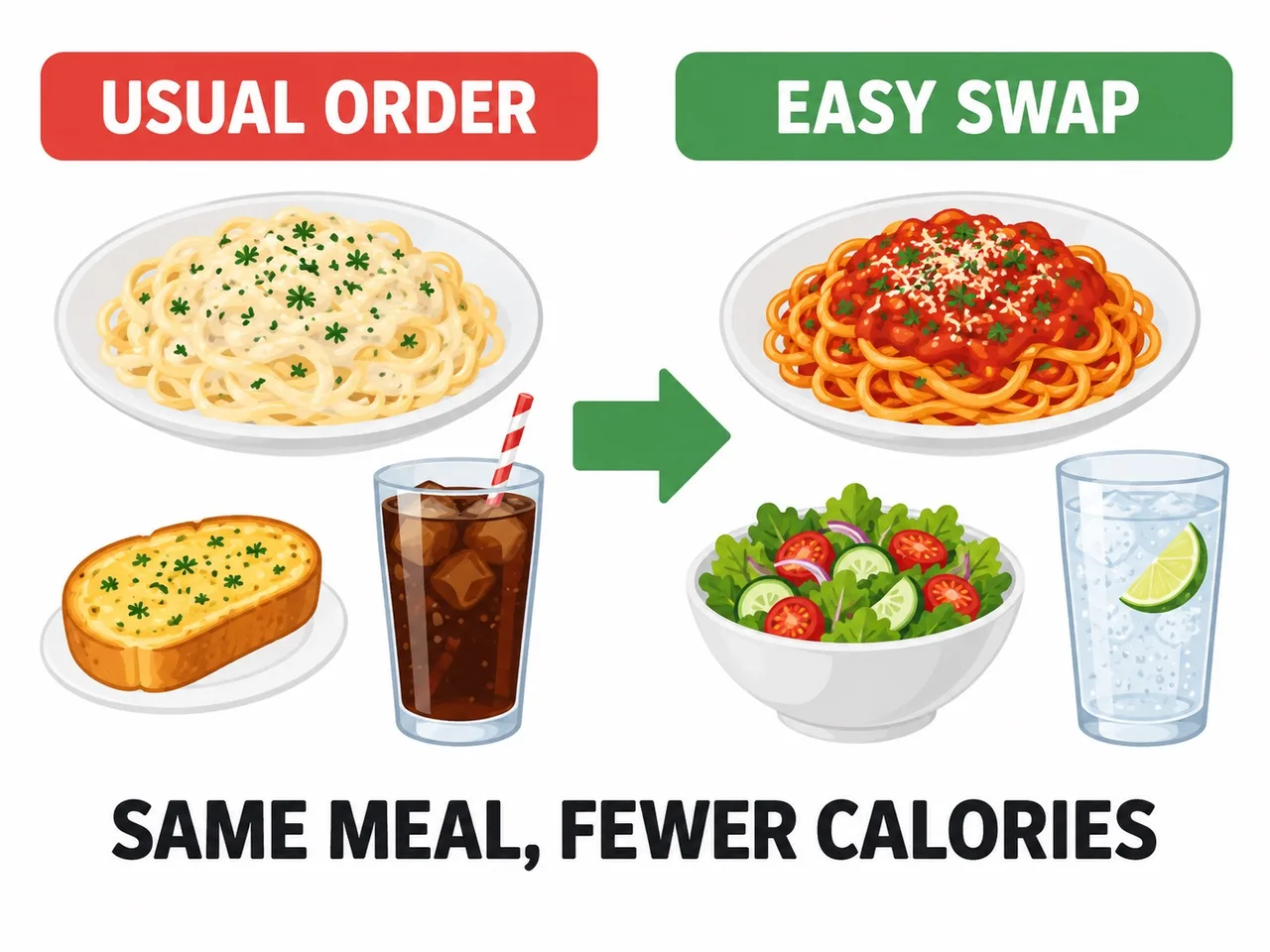
Small swaps keep the meal you wanted while trimming the extras.
Noodles and rice dishes
Soups, broths and dishes where the noodles or rice are served plain are generally lighter than ones fried in oil. Ask for extra vegetables or protein where you can, and eat to comfortable fullness rather than to the bottom of the bowl.
Salads that are not as light as they look
A big salad with fried chicken, cheese, bacon, croutons, nuts and a creamy dressing can contain more calories than a burger. Salads are great, but judge them by what is on top. Lean protein plus plenty of vegetables, with dressing on the side, is the version that does the job.
Coffee, sugary drinks and alcohol
Drinks are the easiest place to save calories because you barely notice the change. A regular 330 ml can of soft drink is roughly 140 calories, large sweetened coffees can run to several hundred, and a few alcoholic drinks can match a full meal. Alcohol also lowers your appetite control, which is why late-night food often follows. If you drink, pick a limit before you go out and alternate with water.
Portion strategies that actually work
Portion control does not mean leaving the table hungry. It means not eating far past full just because the food is there. Practical options:
Decide before you start. Choose how much of the rice, fries or pasta you will eat, then stop there.
Box half early. If portions are big, put half aside for tomorrow before you start eating.
Share starters and desserts instead of ordering one each.
Skip the default extras you do not really want, like the bread basket or the side of fries that came with the meal.
Eat slowly and check in halfway. Fullness signals take a little time to arrive.
Do not arrive starving. A normal meal earlier in the day, or a protein-rich snack, makes it easier to order sensibly.
Estimating and logging meals out
You will never know exactly how many calories are in a restaurant meal, and that is fine. The goal is a reasonable estimate that is consistent over time. A few tips:
Take a photo before you eat. Photo logging is quick, works anywhere and is much more accurate than trying to remember dinner the next morning. It also gives a coach something concrete to look at.
Log components, not the dish name. "Grilled chicken, about a palm and a half; rice, about a fist; vegetables; a spoon of sauce" is easier to estimate than a menu item you have never seen before.
Use hand portions as a rough guide. A palm of protein, a fist of carbs, a thumb of fats or oils and two fists of vegetables is a common way to eyeball servings without scales.
Round up for restaurant food. Kitchens tend to use more oil and sauce than you think. Adding a small buffer to your estimate is usually more accurate than taking the lowest number in a database.
Check published nutrition info when a chain lists it, then use it as a starting point.
The trainer.sg food log is built around this: you can snap a photo of a meal, log it, and, if you work with a coach on the platform, they can see what you actually ate rather than a vague summary at the next session.
Social eating without guilt
Meals with friends, family and colleagues are part of a good life. Trying to make every one of them "perfect" is a fast way to burn out or start skipping them. A healthier mindset:
Think in weeks, not meals. One rich dinner does not undo a week of reasonable eating. What matters is the overall pattern.
Pick what is worth it. If the dessert at this place is the reason you came, have it and skip something you care less about, like the bread or a second drink.
Use the plate method loosely at shared tables: fill your plate with vegetables and protein first, then add the rest.
You do not have to explain your choices. "I am good, thanks" is a complete sentence.
Get straight back to normal. No skipping the next day's meals or punishing workouts to "make up for it". Just eat your usual next meal.
Fitting eating out into a calorie target
If you are aiming to lose fat, gain muscle or maintain, meals out simply need to fit into your overall intake. If you have not set a target yet, start with our guide on how many calories you should eat. Then:
Plan ahead when you know. If dinner out is on the calendar, keep breakfast and lunch protein-focused and a bit lighter, without skipping them entirely.
Hit your protein first during the day so the meal out does not have to do all the work.
Log an honest estimate and move on. A rough number is far more useful than no number.
Look at the weekly average. If you are over one day and on target the rest of the week, your trend is still heading the right way.
Adjust if needed. If you eat out most days and progress has stalled for several weeks, that is a signal to tighten a few of the swaps above, not to quit eating out.
If you have a medical condition such as diabetes, high blood pressure, kidney disease or food allergies, or you have a history of disordered eating, check with your doctor or a registered dietitian before changing how you eat.
Where a coach helps
Most people already know grilled is lighter than fried. The hard part is doing it consistently with a busy calendar, work lunches and weekends out. A good personal trainer or nutrition-focused coach can review your food logs, spot the two or three habits that make the biggest difference for you, and adjust your plan around how you actually live. If that sounds useful, you can browse personal trainers on trainer.sg. And if staying consistent is the bigger problem, read about small daily fitness habits that make healthy choices more automatic.
FAQ
How can I eat healthy when eating out?
Build your meal around a lean protein and vegetables, keep the carb portion moderate, ask for sauces and dressings on the side, and choose water or unsweetened drinks. Grilled, baked, steamed and broth-based dishes are usually lighter than fried or creamy ones.
What is the healthiest thing to order at a restaurant?
There is no single healthiest dish, but a good default is a grilled or baked protein with vegetables and a modest portion of rice, potatoes or bread. Most menus have something close to that, or can make it with a simple request.
Can I eat out and still lose weight?
Yes. Weight loss comes down to your overall calorie intake over time. If meals out fit within your weekly target, you can eat out regularly and still make progress. Choosing protein first, watching drinks and controlling portions makes that much easier.
How do I count calories when eating out?
Take a photo, break the meal into its components, estimate each with hand portions or published nutrition info, and round up a little for cooking oil and sauces. Aim for consistent estimates rather than precision.
Are salads always the healthy choice?
Not always. A salad loaded with fried toppings, cheese, croutons and creamy dressing can contain more calories than a burger. Choose salads with a lean protein and plenty of vegetables, and have the dressing on the side.
Conclusion
Eating out healthy is not about strict rules or ordering the saddest thing on the menu. Build a rough plate with protein and vegetables, watch the oils, sauces and drinks, decide on portions before you start, log an honest estimate and judge your progress by the week rather than one meal. Do that consistently and eating out becomes a normal part of a healthy routine instead of something to worry about.
·10 min read
Is a Personal Trainer Worth It? An Honest Guide
What a personal trainer actually gives you, who benefits most, when you can skip one, and how to get real value from sessions without paying for more than you need.