Small Daily Fitness Habits That Actually Add Up
Forget the big overhaul. These small daily fitness habits are easy to start, simple to track and add up to real results over a few months.
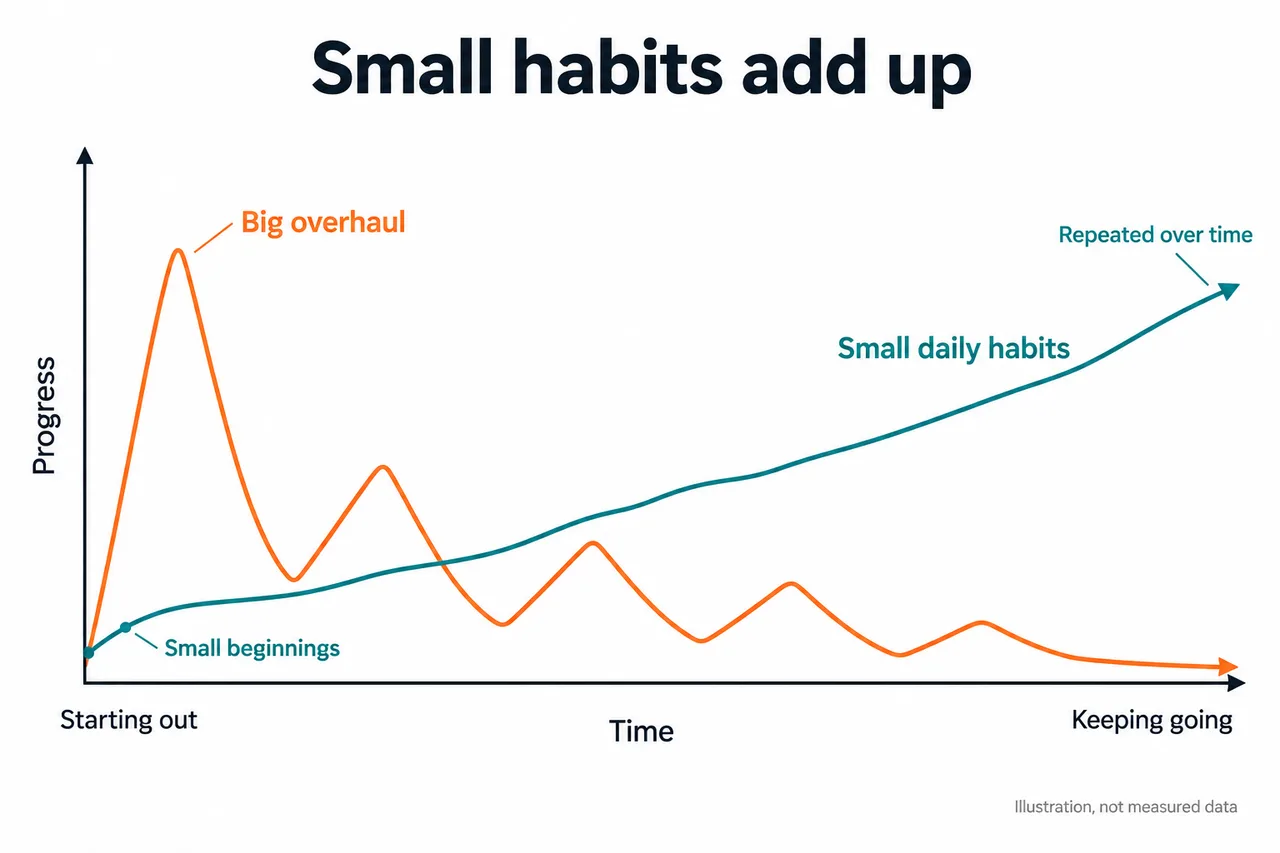
Big fitness transformations are fun to watch online. A 12-week shred, a brand-new diet, a 5am wake-up routine with cold plunges. But if you've ever tried to change everything at once, you probably know how it ends: a great first week, a tough second week, and by week three you're back where you started, feeling a bit worse about yourself.
There's a quieter approach that works much better for most people, and it starts with habits so small they almost feel silly. A ten-minute walk after dinner. A glass of water before your coffee. Protein at breakfast. On their own, none of these will change your life this week. Stacked together and repeated for a few months, they very much will.
Why small daily habits beat a big fitness overhaul
The problem with big changes is that they rely on willpower, and willpower is a limited and unreliable resource. You might have loads of it on a Monday morning and none at all by Thursday night after a long day. Small habits get around this because they're easy enough to do on your worst day, not just your best one.
They also compound. Take something as simple as an extra 2,000 steps a day, roughly a 15 to 20 minute walk. Depending on your size and pace, that's somewhere in the ballpark of 60 to 100 extra calories burned. Barely noticeable on any single day. But over a year, that's 700,000-odd extra steps and tens of thousands of calories, from a habit that takes less time than an episode of your favourite show.
The same goes for strength. Doing ten squats every time you boil the kettle won't make you a powerlifter, but it adds up to hundreds of extra reps a week, and more importantly, it makes you the kind of person who moves during the day. That identity shift is where the real change happens.
Daily fitness habits worth starting with
You don't need all of these. In fact, please don't try all of these. Pick one or two that feel easiest for your life right now, and only add another once those are on autopilot.
Walk a little more, on purpose. Get off the train a stop early, take the stairs instead of the lift, or go for a short walk after dinner. A daily step goal is one of the simplest habits to track, and it quietly makes a big difference to your overall activity.
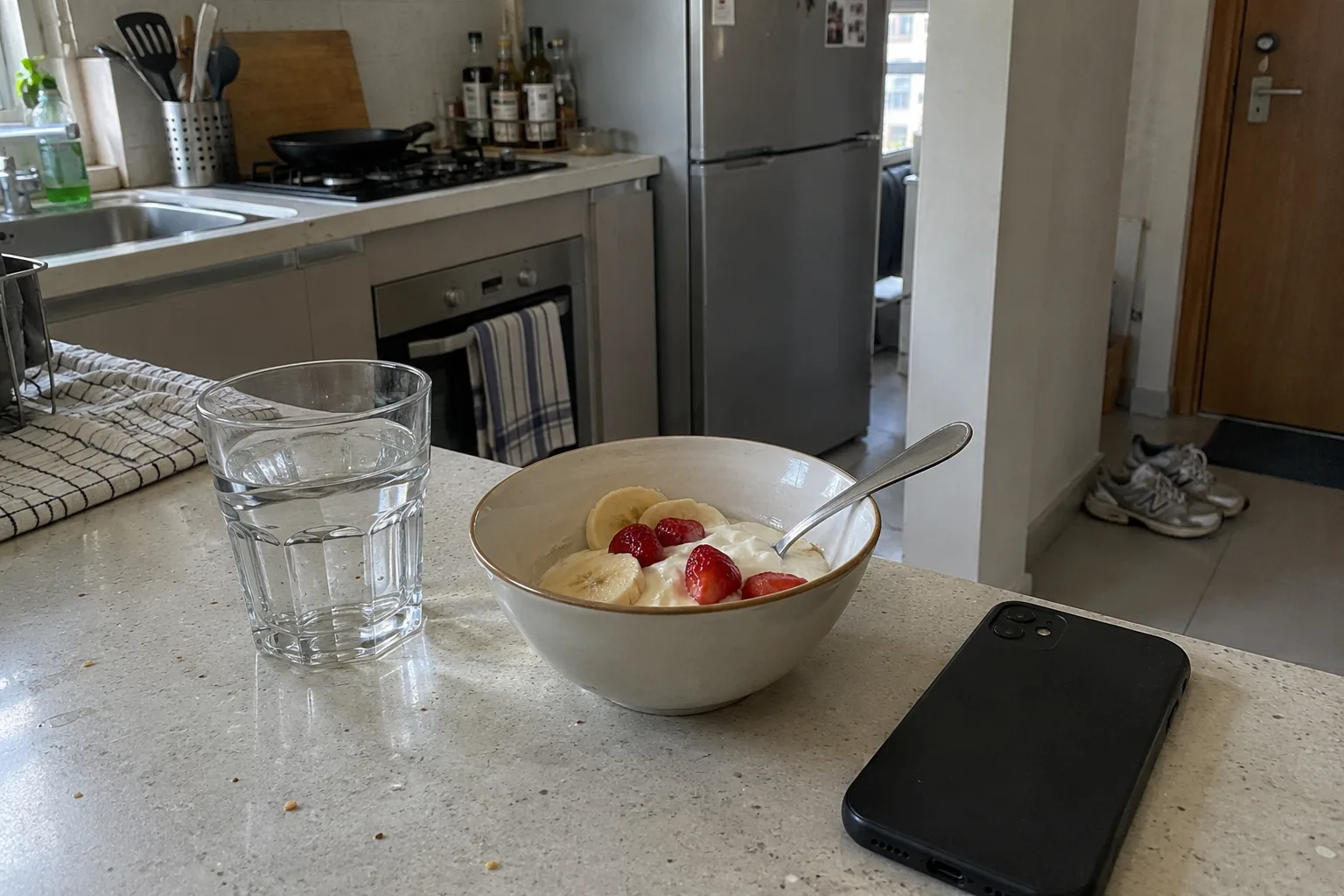
Eat some protein at breakfast. Lots of people get most of their protein at dinner and very little in the morning. Adding eggs, Greek yoghurt or a protein shake to breakfast makes it easier to hit your daily total, keeps you fuller for longer and supports any strength training you're doing.
Drink a glass of water first thing. Not because of any magic detox effect, but because it's an easy win that starts the day with a tick, and staying hydrated helps your energy and training.
Do a tiny bit of movement every day. Five minutes of stretching, a few push-ups, a short mobility routine before bed. The point isn't the workout itself. It's keeping the "I exercise" switch turned on even on rest days.
Protect your sleep. Pick a regular lights-out time and try to stick to it. Sleep affects your appetite, your recovery and how much you feel like training the next day, so it's one of the highest-value habits on this list.
Log something, anything. Your meals, your workouts, your steps or your weight. Writing things down builds awareness, and awareness is what makes every other habit easier to keep.
How to build habits that actually stick
Choosing a good habit is the easy part. Making it automatic is where most people struggle, so here are a few things that help.
Make it smaller than you think you need to. If "work out for 30 minutes every day" keeps failing, try "put on my workout clothes every day". It sounds ridiculous, but it works, because the hardest part of most habits is starting. Once the tiny version is automatic, you can grow it.
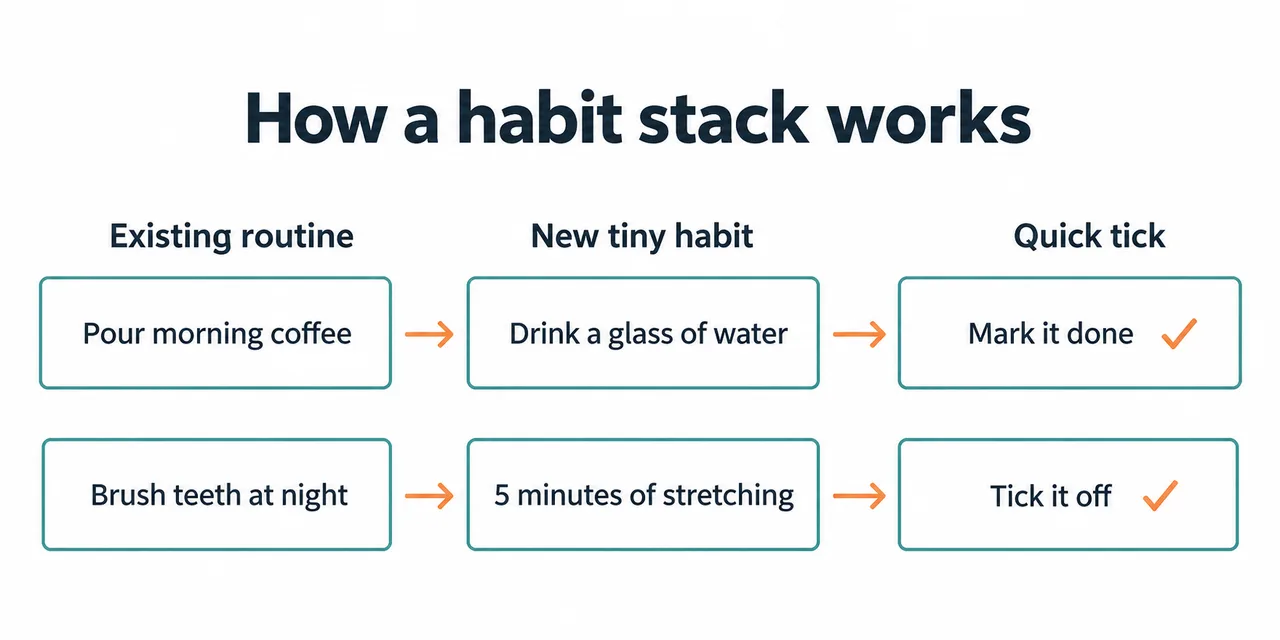
Attach it to something you already do. This is often called habit stacking. "After I pour my morning coffee, I drink a glass of water." "After I brush my teeth at night, I do five minutes of stretching." Your existing routine becomes the reminder, so you don't have to rely on remembering.
Define exactly what "done" means. "Eat healthier" is impossible to tick off. "Have a portion of vegetables with lunch" isn't. A clear yes or no, or a simple number like 8,000 steps or 2 litres of water, makes it obvious whether you've done it today.
Be patient with the timeline. You might have heard that it takes 21 days to form a habit. Sadly, that number doesn't hold up. A well-known study from University College London found it took people a median of about 66 days for a new habit to feel automatic, with a huge range from 18 days to over 250, depending on the person and the habit. So if it still feels like effort after three weeks, that's completely normal. Keep going.
Why a fitness habit tracker helps
Tracking your habits does two useful things. First, it makes your consistency visible. When you can see a week full of ticks, you're far more likely to keep it going, because nobody likes breaking a streak. Second, it's honest. It's easy to feel like you've been "pretty good this week" until you look and realise you hit your step goal twice.
A few tips for tracking without it taking over your life. Keep it to three habits or fewer at a time. Look at the week, not the day, because one missed day means nothing while a pattern of missed days tells you the habit is too big or badly timed. And if you do miss, just get the next one. A broken streak isn't a reason to stop. It's a reason to start a new one tomorrow.
If you work with a coach on Trainer.sg, they can assign your habits for you, either as simple daily yes-or-no habits or as number goals like steps, water or grams of protein. They'll show up on your Today screen alongside your workouts, so ticking one off takes a couple of seconds, and you can see the last seven days and your current streak at a glance. Your coach sees it too, which means they can celebrate the wins and help adjust a habit that isn't working before you give up on it.
Start small, start today
You don't need a new programme, a perfect diet or a fresh Monday to start making progress. You just need one small thing you'll actually do today, and then again tomorrow.
So pick one habit from this article. Make it tiny, attach it to something you already do and give yourself a way to tick it off. In a few months, you'll look back and be surprised by how far those small daily habits have carried you.
And if your bigger struggle is sticking with the gym itself, have a read of why you keep quitting the gym, and how to stop. The two go hand in hand.