How Much Protein Per Day? Targets by Body Weight | Trainer.sg
How Much Protein Do You Need Per Day?
The RDA is only a minimum. See how much protein you need per day for general fitness, muscle gain and fat loss, with targets by body weight, food values and simple ways to hit them.
Most people know protein matters, but the numbers online range from "you get plenty already" to "eat a chicken breast every two hours". So how much protein per day do you actually need? For most healthy adults, the bare minimum is 0.8 g per kg of body weight. If you train regularly, want to build muscle or are trying to lose fat, the useful range is higher: roughly 1.2 to 2.2 g per kg.
This guide explains where those numbers come from, shows what they look like for different body weights, and gives practical ways to hit your target with ordinary food.
The short answer
Minimum for health: 0.8 g per kg of body weight per day. This is the Recommended Dietary Allowance (RDA).
Regular exercise: about 1.2–1.6 g per kg.
Building muscle or losing fat while lifting: about 1.6–2.2 g per kg.
Adults over about 65: at least 1.0–1.2 g per kg, more if active.
Spread it over 3–5 meals, aim for roughly 0.3–0.4 g per kg in each, and get most of it from whole foods. That is the whole strategy. The rest of this article fills in the detail.
How much protein per day do you need? RDA vs active ranges
The RDA of 0.8 g/kg is set to cover the basic needs of nearly all healthy adults. It is a minimum to avoid deficiency, not a target for people who train. It was never designed to answer the question "how much protein helps me build muscle or keep it while dieting".
Sports nutrition position stands, such as those from the International Society of Sports Nutrition (ISSN) and the joint statement from the American College of Sports Medicine and dietetic associations, recommend more for active people. Their ranges broadly sit between about 1.2 and 2.0 g/kg, and research on resistance training suggests the benefit for muscle growth tends to level off somewhere around 1.6 g/kg, with 2.2 g/kg covering most people at the top end.
These are ranges, not exact prescriptions. Someone eating near the lower end of their range and training consistently will usually do better than someone hitting 2.2 g/kg but skipping workouts.
Why protein needs go up when you are losing weight
In a calorie deficit, your body is more willing to break down muscle along with fat. Higher protein, combined with resistance training, helps you hold on to that muscle. It also tends to keep you fuller than the same calories from refined carbs or fat, which makes a deficit easier to stick with. If you are working out your calorie target too, see how many calories you should eat to lose weight.
What if you carry a lot of body fat?
The g/kg ranges were mostly studied in people at a moderate body weight. If you have a lot of weight to lose, multiplying 2.2 g by your current weight can give a number that is high and hard to eat. A common, practical fix is to base your target on your goal weight instead, or on the weight you would be at a healthy body size.
Protein targets by body weight
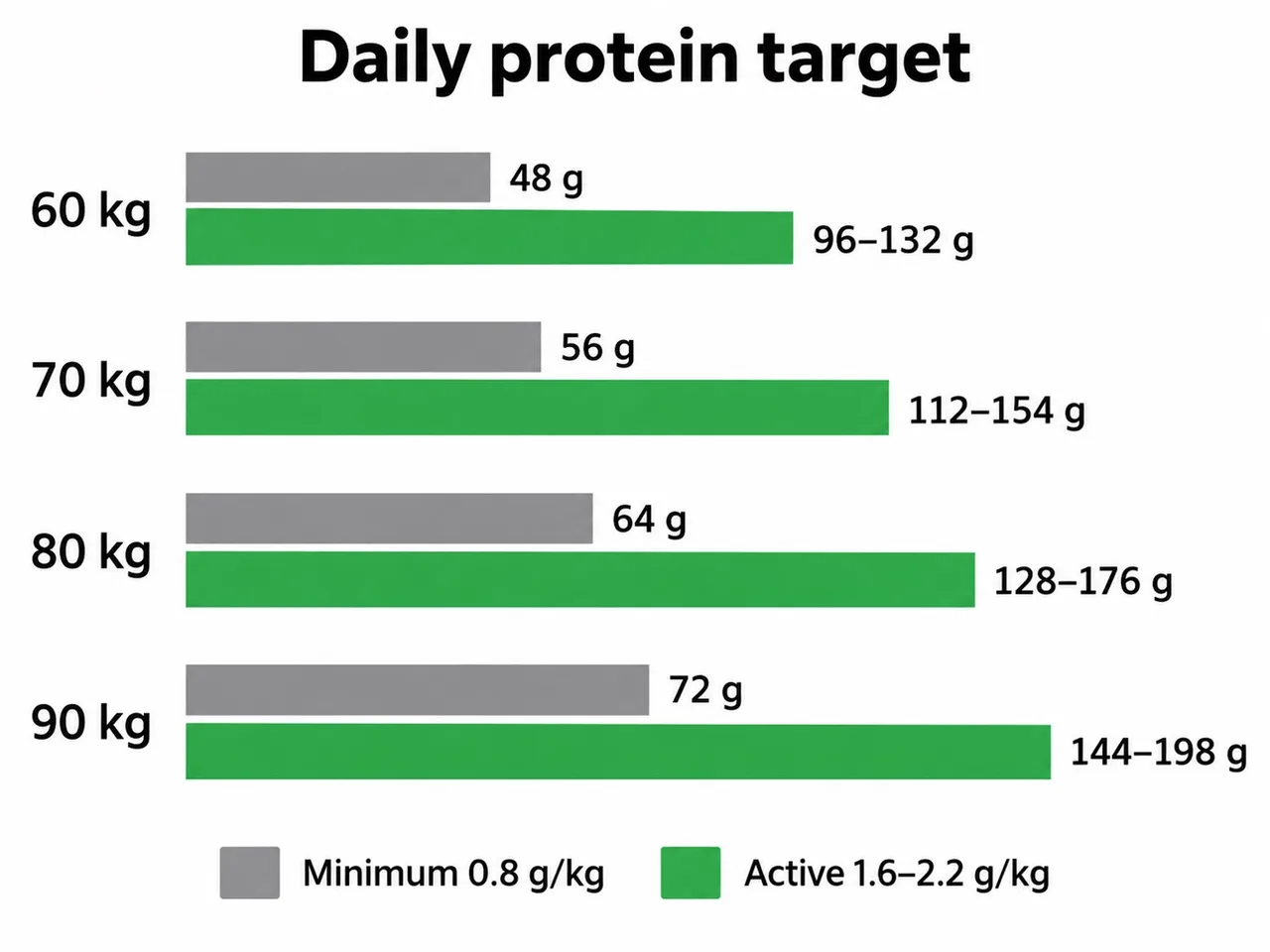
Here is what the ranges look like in grams. Find the row closest to your weight and pick the column that matches your goal.
Body weight
Minimum (0.8 g/kg)
Active (1.2–1.6 g/kg)
Muscle gain or fat loss (1.6–2.2 g/kg)
50 kg (110 lb)
40 g
60–80 g
80–110 g
60 kg (132 lb)
48 g
72–96 g
96–132 g
70 kg (154 lb)
56 g
84–112 g
112–154 g
80 kg (176 lb)
64 g
96–128 g
128–176 g
90 kg (198 lb)
72 g
108–144 g
144–198 g
100 kg (220 lb)
80 g
120–160 g
160–220 g
The gap between the minimum and an active target is bigger than most people expect.
If you work in pounds, a simple shortcut for the active range is about 0.7–1 g of protein per pound of body weight.
How to spread protein across your meals
Your body does not store protein the way it stores carbs and fat, so spreading it out tends to work better than eating most of it at dinner. A practical guideline from sports nutrition research is about 0.3–0.4 g per kg of body weight per meal, across three to five meals or snacks. For most people that works out to roughly 20–40 g per meal.
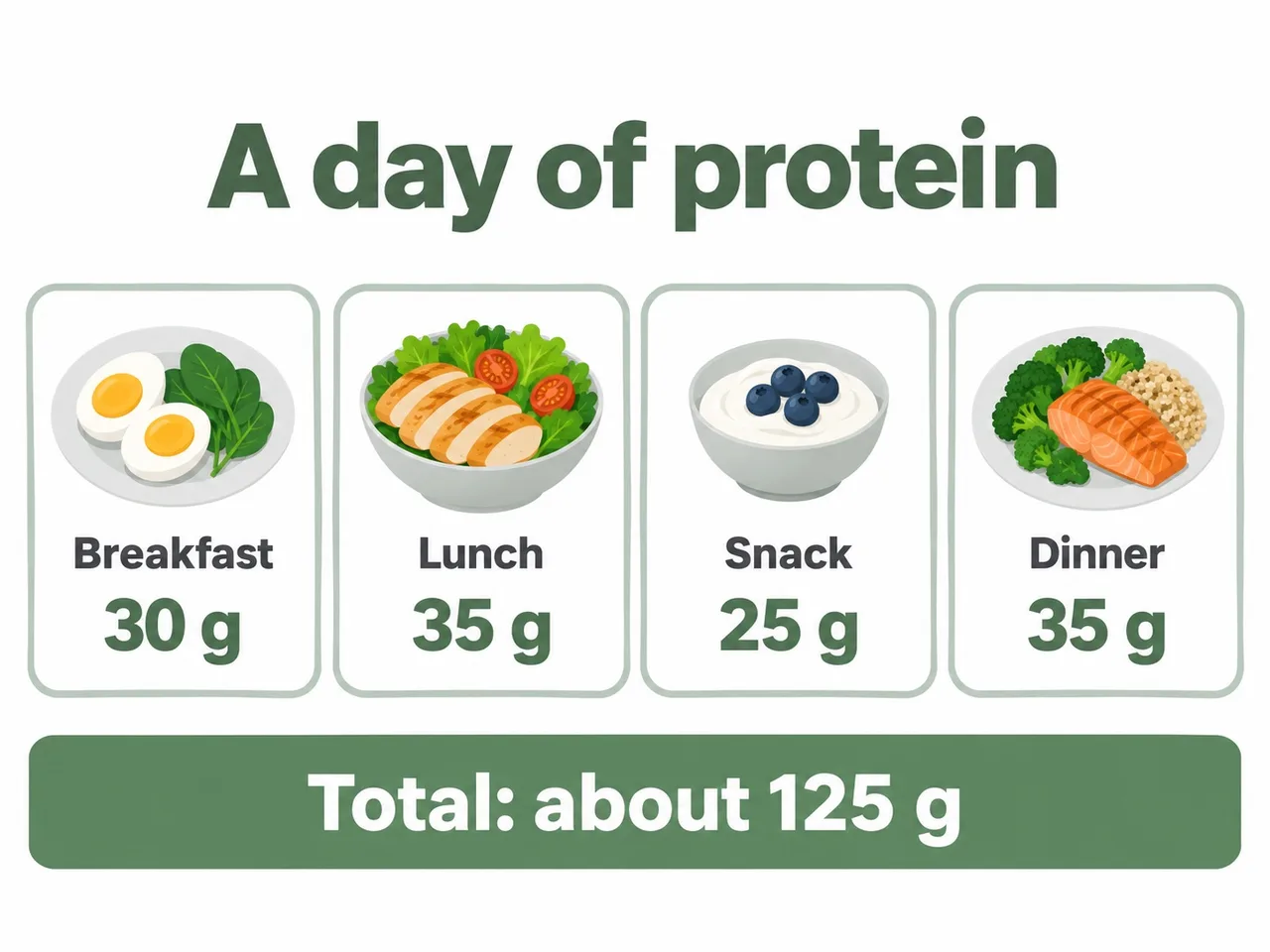
For a 70 kg person aiming for about 125 g a day, a normal day could look like this:
Meal
Example
Approx. protein
Breakfast
2 eggs plus a bowl of plain Greek yogurt with oats and fruit
30 g
Lunch
Chicken, rice and salad (about 120 g cooked chicken)
35 g
Snack
A protein shake, or cottage cheese with fruit
25 g
Dinner
Salmon fillet (about 150 g) with potatoes and vegetables
35 g
Total
About 125 g
Four moderate servings get you there without any single huge meal.
Most people already eat a decent amount at dinner. The easiest gains usually come from breakfast and snacks, which tend to be low in protein (toast, cereal, biscuits, fruit on its own).
Protein in common foods
Values below are approximate and vary by brand, cut and preparation. They are close enough for everyday planning.
Food
Serving
Approx. protein
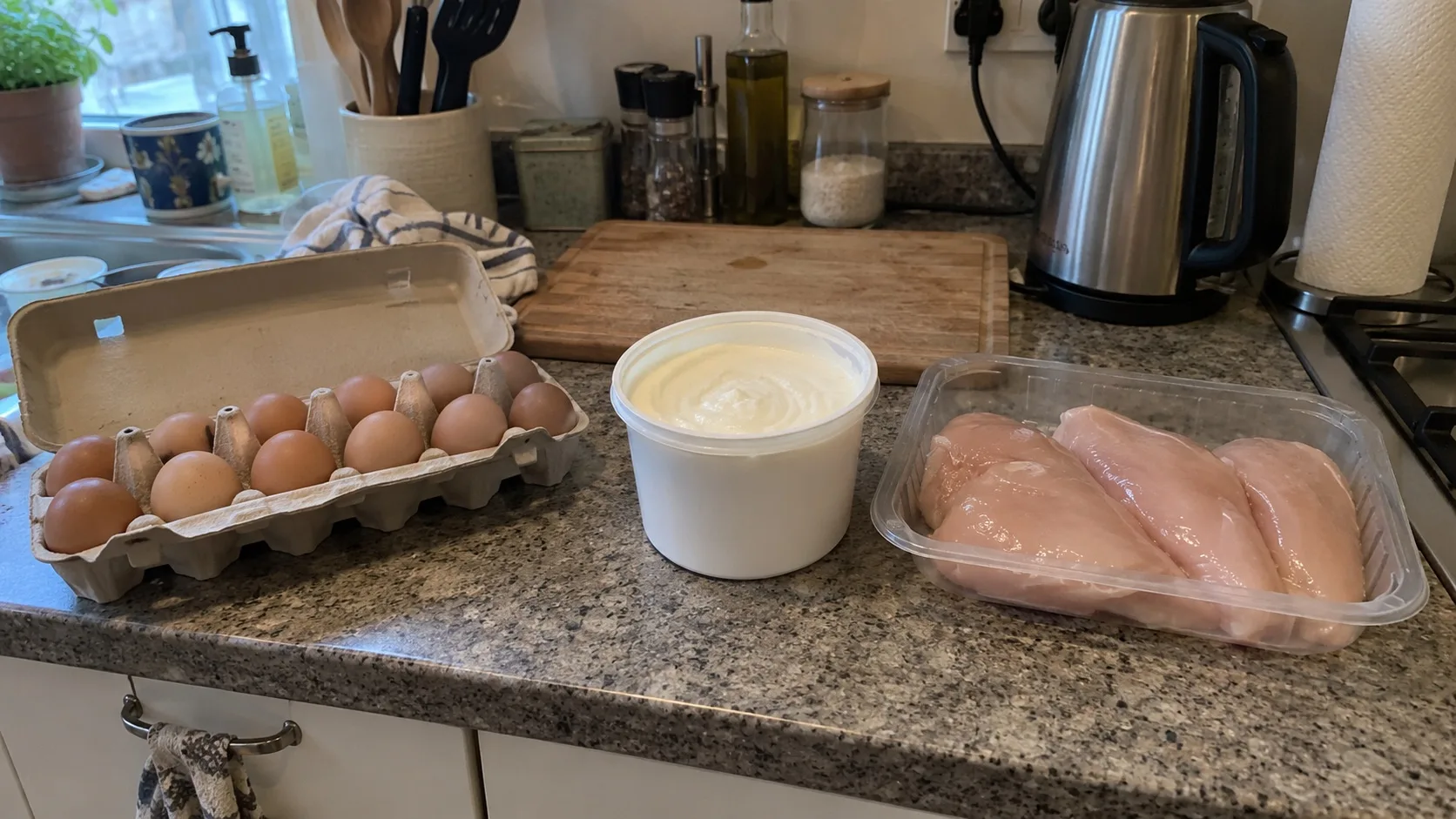
Chicken breast, cooked
100 g
31 g
Lean beef mince, cooked
100 g
26 g
Tuna, canned, drained
100 g
25 g
Salmon, cooked
100 g
22–25 g
Eggs
1 large
6 g
Greek yogurt, plain
170 g pot
15–17 g
Cottage cheese
100 g
11 g
Milk
250 ml glass
8 g
Tempeh
100 g
19 g
Firm tofu
100 g
12–17 g
Edamame, shelled
1 cup (about 155 g)
18 g
Lentils, cooked
1 cup (about 200 g)
18 g
Chickpeas, cooked
1 cup (about 165 g)
15 g
Peanut butter
2 tablespoons
7 g
Oats, dry
40 g
5 g
Whey protein powder
1 scoop (about 30 g)
20–25 g
A useful habit is to build each meal around one main protein source first, then add carbs, vegetables and fats around it.
Plant-based protein options
You can hit the same targets on a vegetarian or vegan diet. It just takes a bit more planning, because plant foods usually come with more carbs and fibre per gram of protein.
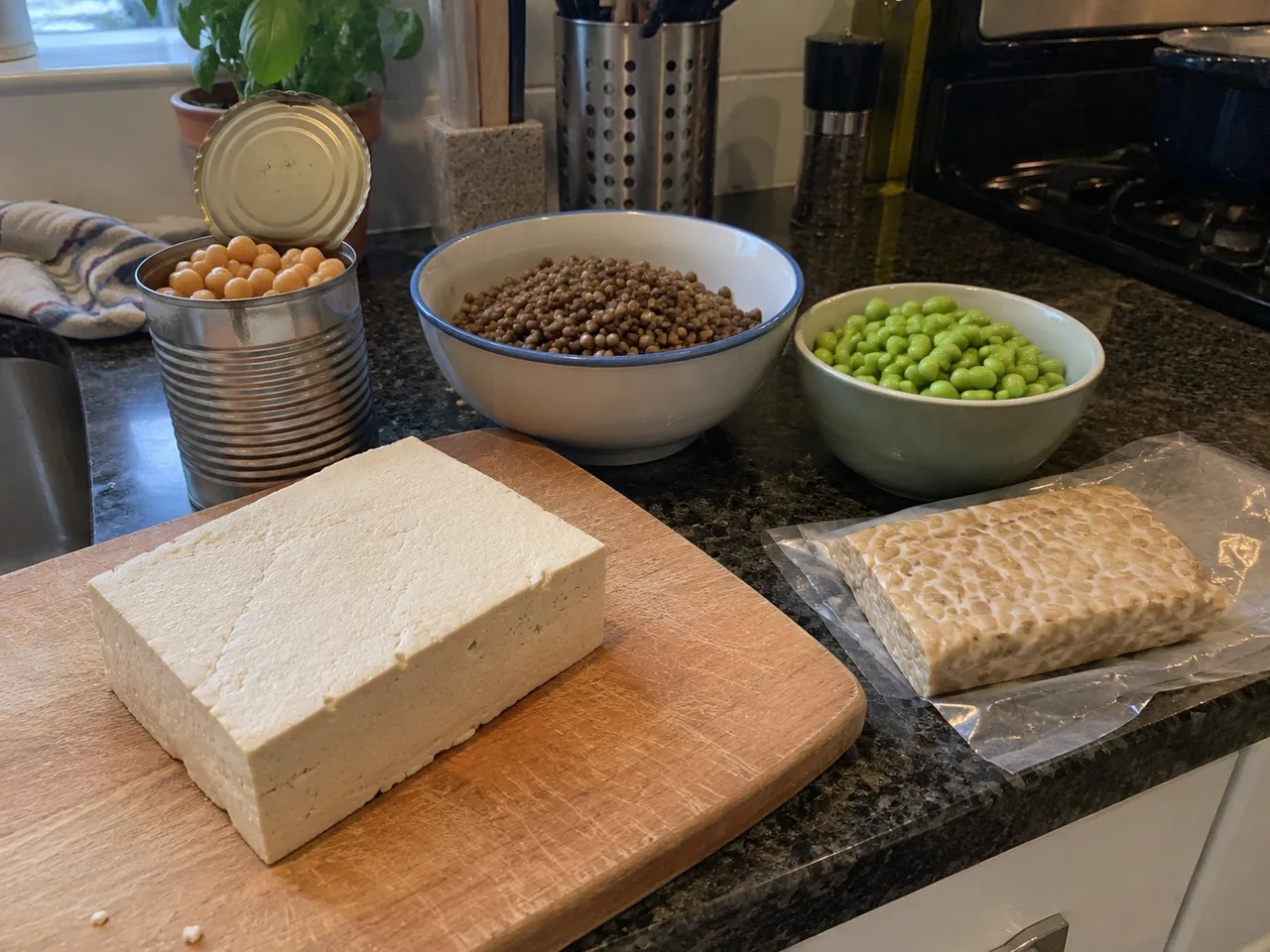
Soy foods like tofu, tempeh, edamame and soy milk are some of the most protein-dense plant options.
Legumes such as lentils, chickpeas and beans are cheap and filling, and pair well with grains.
Seitan (made from wheat gluten) is very high in protein, but avoid it if you need to avoid gluten.
Pea or soy protein powder is a convenient way to fill gaps.
Soy foods and legumes make up the core of most plant-based protein plans.
Plant proteins tend to be slightly lower in some essential amino acids, such as leucine. Eating a variety of sources across the day and aiming for the upper half of your range usually covers this. You do not need to combine proteins at every meal.
Do you need protein powder?
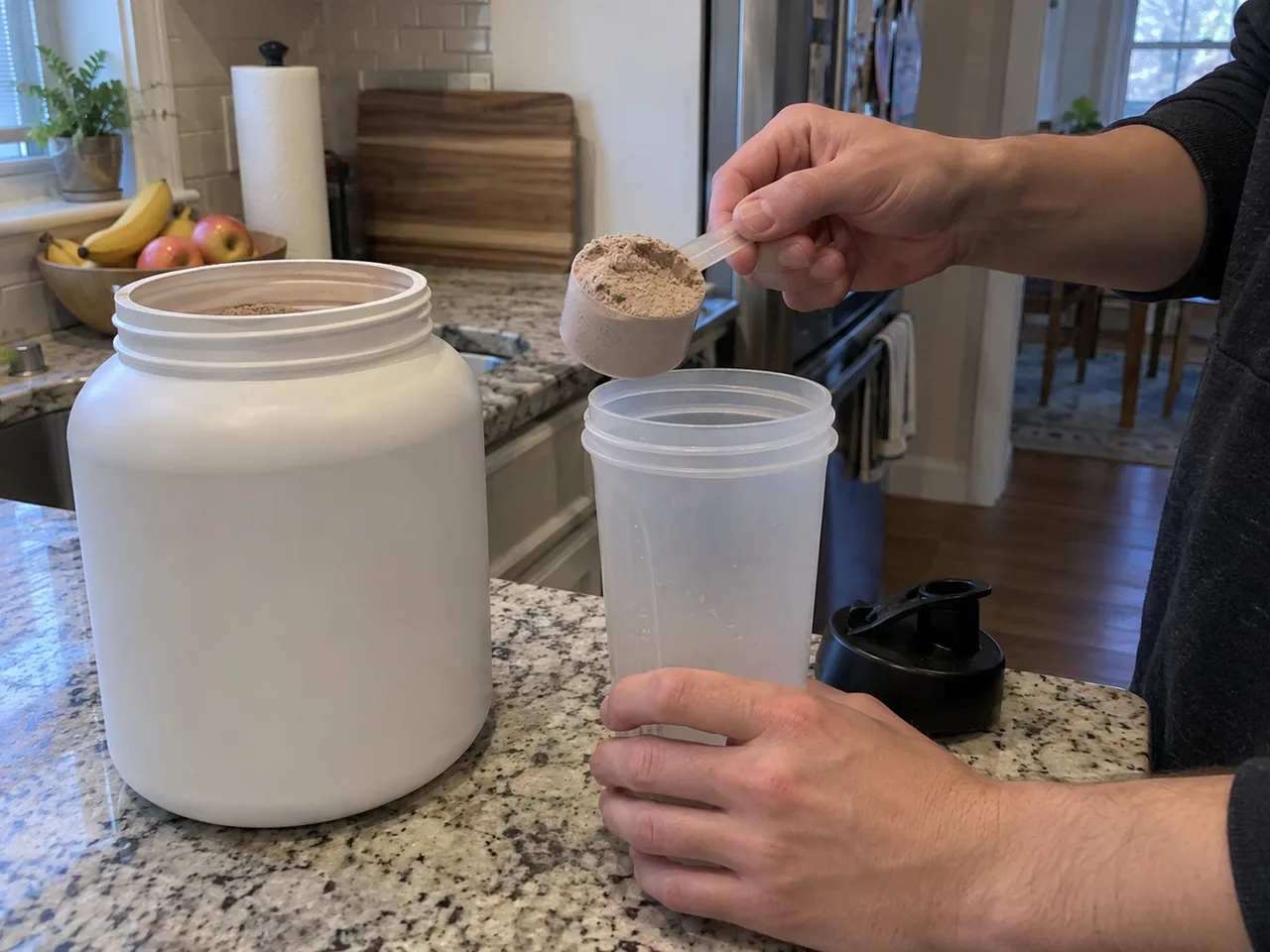
No. Protein powder is food, not a requirement. It is useful when:
You struggle to reach your target with meals alone.
You want a quick option after training or on busy days.
Your appetite is small, or you are on a plant-based diet and want an easy top-up.
If you use one, one or two scoops a day is plenty for most people. Supplements are not regulated as tightly as medicines in many countries, so choose a product that has been independently tested for contents and purity.
Handy for filling a gap, not essential.
Protein for older adults
Muscle mass and strength naturally decline with age, and older bodies respond less strongly to the same amount of protein. For this reason, expert groups working on nutrition in ageing suggest healthy adults over about 65 eat at least 1.0–1.2 g/kg per day, with more for those who are active or recovering from illness.
Two things help most: getting a decent serving of protein at each meal (rather than a light breakfast and lunch), and doing regular strength training. Older adults with a medical condition, or anyone who has lost weight without trying, should check their needs with a doctor or dietitian.
Is a high-protein diet safe?
For healthy adults, intakes within the ranges above are considered safe in mainstream research. Studies have not shown that high protein harms the kidneys of people with normal kidney function.
It is different if you have kidney disease or reduced kidney function. In that case protein may need to be limited, so talk to your doctor before increasing it. The same applies if you have liver disease, are pregnant, or have been given a specific diet for a medical reason.
A few practical side notes: drink enough water, keep eating fruit, vegetables and whole grains so fibre does not drop, and remember that protein still has calories (4 kcal per gram).
Practical ways to hit your protein target
Work out a rough daily number using the table above. A round figure is fine.
Anchor every meal on a protein source, such as eggs, yogurt, meat, fish, tofu or legumes.
Fix breakfast first. Swapping toast or cereal for eggs, Greek yogurt or a high-protein smoothie can add 20 g or more.
Keep easy snacks around: yogurt, cottage cheese, boiled eggs, edamame, milk or a shake.
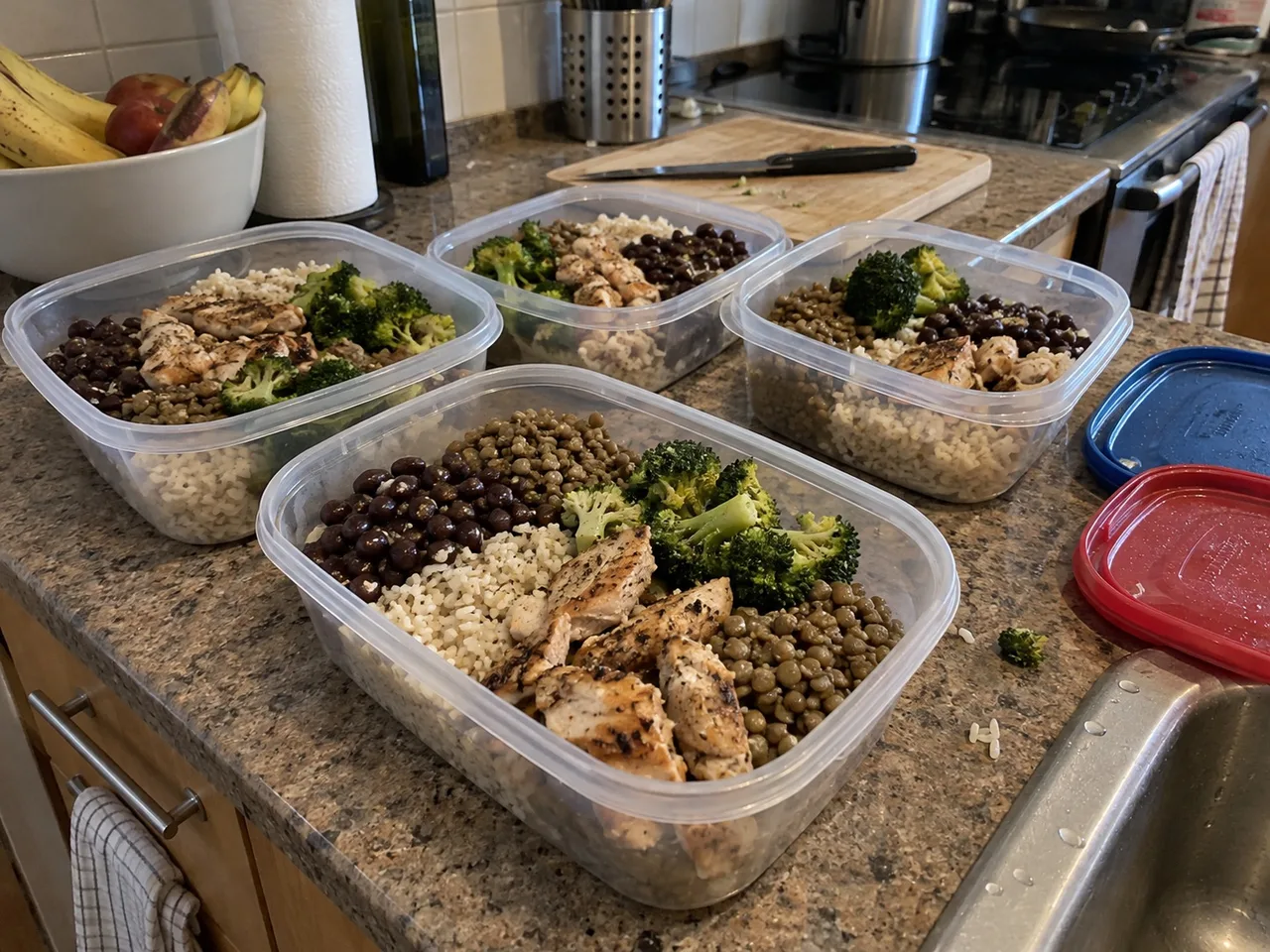
Batch cook. Cooking a tray of chicken, tofu or lentils for the week removes most of the daily effort.
Track for a week or two. Logging what you eat shows quickly whether you are close or far off. You do not need to do it forever.
A couple of hours of prep can cover most of the week's lunches.
If consistency is the hard part, small repeatable routines matter more than the perfect plan. Our guide to small daily fitness habits covers a few that pair well with this, and how to eat healthy when eating out helps when you are not cooking.
When a coach can help
Protein targets are simple on paper. The tricky part is fitting them into your actual week: your appetite, budget, food preferences and training schedule. A good personal trainer or nutrition-focused coach can set a realistic target, review your food logs and adjust as your goals change. If that would help, you can browse trainers and coaches on Trainer.sg and filter by what you are looking for.
FAQ
How much protein do I need per day to build muscle?
Most people building muscle do well with about 1.6–2.2 g per kg of body weight per day, alongside regular resistance training. Around 1.6 g/kg covers most people, and going higher mainly gives a margin of safety.
How much protein should I eat to lose weight?
Aim for roughly 1.6–2.2 g per kg while in a calorie deficit. If you carry a lot of body fat, base the number on your goal weight rather than your current weight.
Is 100 g of protein a day enough?
It depends on your size and goals. For a 60 kg person who trains, 100 g sits within the useful range. For a 90 kg person trying to build muscle, it falls short of the 1.6–2.2 g/kg range.
How much protein can your body absorb in one meal?
Your body absorbs nearly all the protein you eat. The real question is how much it uses for muscle building at once, and that appears to level off at around 0.3–0.4 g per kg per meal. Larger servings are not wasted, but spreading protein across several meals is a sensible default.
Is too much protein bad for your kidneys?
In people with healthy kidneys, intakes in the ranges above have not been shown to cause harm. If you have kidney disease or reduced kidney function, check with your doctor before increasing protein.
Do I need to eat protein right after a workout?
It helps a little, but your total daily protein matters much more. Having a protein-rich meal within a few hours before or after training is enough for most people.
The bottom line
The RDA of 0.8 g/kg is a floor, not a goal. If you exercise, aim for around 1.2–1.6 g/kg, and for 1.6–2.2 g/kg if you are building muscle or losing fat. Spread it over a few meals, lean on simple whole foods, and use protein powder only if it makes life easier. Get the daily total right most days, and train consistently, and you will have covered the parts that matter.
·11 min read
What to Expect at Your First Personal Training Session
What really happens at a first personal training session: how to prepare, what to wear and bring, the typical structure, how hard it will be, soreness afterwards and the questions to ask before you leave.