First Personal Training Session: What to Expect | Trainer.sg
What to Expect at Your First Personal Training Session
What really happens at a first personal training session: how to prepare, what to wear and bring, the typical structure, how hard it will be, soreness afterwards and the questions to ask before you leave.
Booking your first personal training session is a good step, but it's normal to walk in not quite knowing what's going to happen. Will they weigh you? Will you be wrecked by the end? Do you need to already be fit? This guide covers what to expect at a first personal training session from start to finish, how to prepare, and what to ask before you leave.
The short version: a good first session is mostly about getting to know you. Expect a conversation, a few simple movement checks, a light workout and a plan for what comes next. It should leave you feeling capable, not crushed.
Before the session: how to prepare
Fill in the health questionnaire honestly
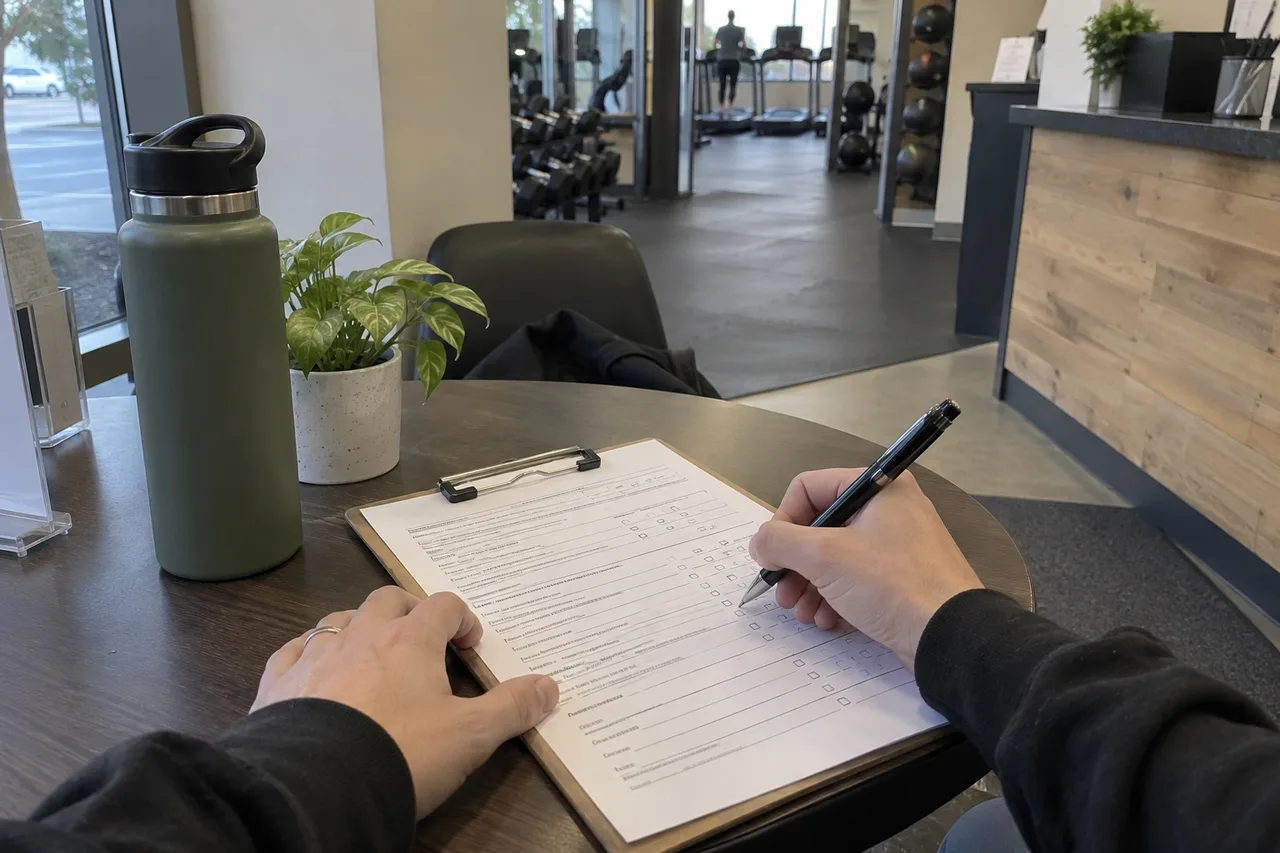
Most trainers will send you a health screening form before you arrive or ask you to fill one in at the start. A common one is the PAR-Q (Physical Activity Readiness Questionnaire), or the newer PAR-Q+. It asks a short list of yes/no questions about things like heart conditions, chest pain, dizziness, blood pressure, joint or bone problems, and any medication you take.
This isn't paperwork for the sake of it. It tells your trainer whether you can start straight away or should get clearance from a doctor first, and what to be careful with. If you answer yes to any of the medical questions, or you're pregnant, recovering from surgery, or managing a condition such as diabetes or high blood pressure, check with your doctor before you start a new exercise programme.
Most trainers ask you to complete a short health questionnaire before your first session.
Think about your goals
You don't need a perfect answer, but it helps to think about why you booked. "Get fitter" is fine as a starting point. Your trainer will help you make it more specific, so it's useful to have a few details in mind:
What you want to change: strength, weight, energy, posture, a sport, an event, or just building a routine.
How many days a week you can realistically train, including on your own.
Anything you really dislike, or really enjoy.
What to eat and when
Don't train on a completely empty stomach, but don't arrive stuffed either. A simple rule of thumb:
2 to 3 hours before: a normal balanced meal, such as rice or potatoes with chicken, fish, eggs or tofu and some vegetables.
30 to 60 minutes before: if you haven't eaten for a while, a small, easy snack like a banana, a yoghurt or a slice of toast.
Avoid right before: large, greasy or very high-fibre meals, which can sit heavily once you start moving.
If you train first thing in the morning, a small snack and some water is usually enough. If you tend to feel light-headed when you exercise hungry, tell your trainer.
Sleep and hydration
Try to get a normal night's sleep the night before. You don't need to do anything special, but a short or broken night will make everything feel harder. Drink water through the day as usual and bring a bottle with you. There's no need to force down litres beforehand; sipping during the session is enough for most people.
Skip a hard workout the day before if you can, so your trainer sees how you move when you're fresh.
What to wear and bring
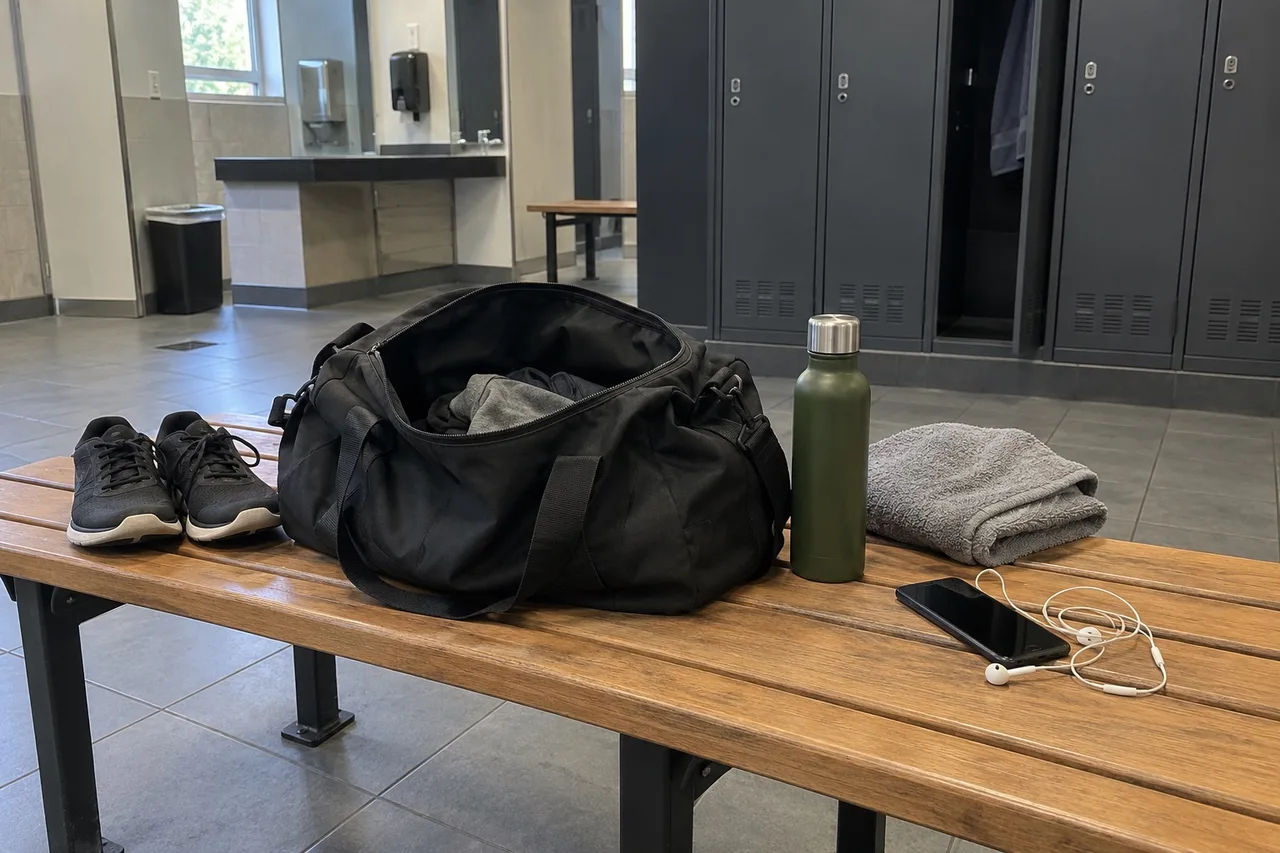
You don't need new gear. Wear something you can move in comfortably and bend, squat and reach in without adjusting it every few seconds.
Bring
Why
Comfortable training clothes
Your trainer needs to see how your hips, knees and shoulders move, so avoid very baggy or restrictive clothing.
Flat, stable trainers
Good for lifting and most gym work. Thick, soft running shoes are fine for a first session but less stable for squats.
Water bottle
You'll want to sip between exercises.
Small towel
Many gyms require one on benches and mats.
A list of medications and injuries
Easier than trying to remember dates and details on the spot.
A snack for afterwards
Useful if you have a long trip home or the session runs into a mealtime.
Comfortable clothes, stable shoes, water and a towel cover most of what you need.
What happens in a first personal training session
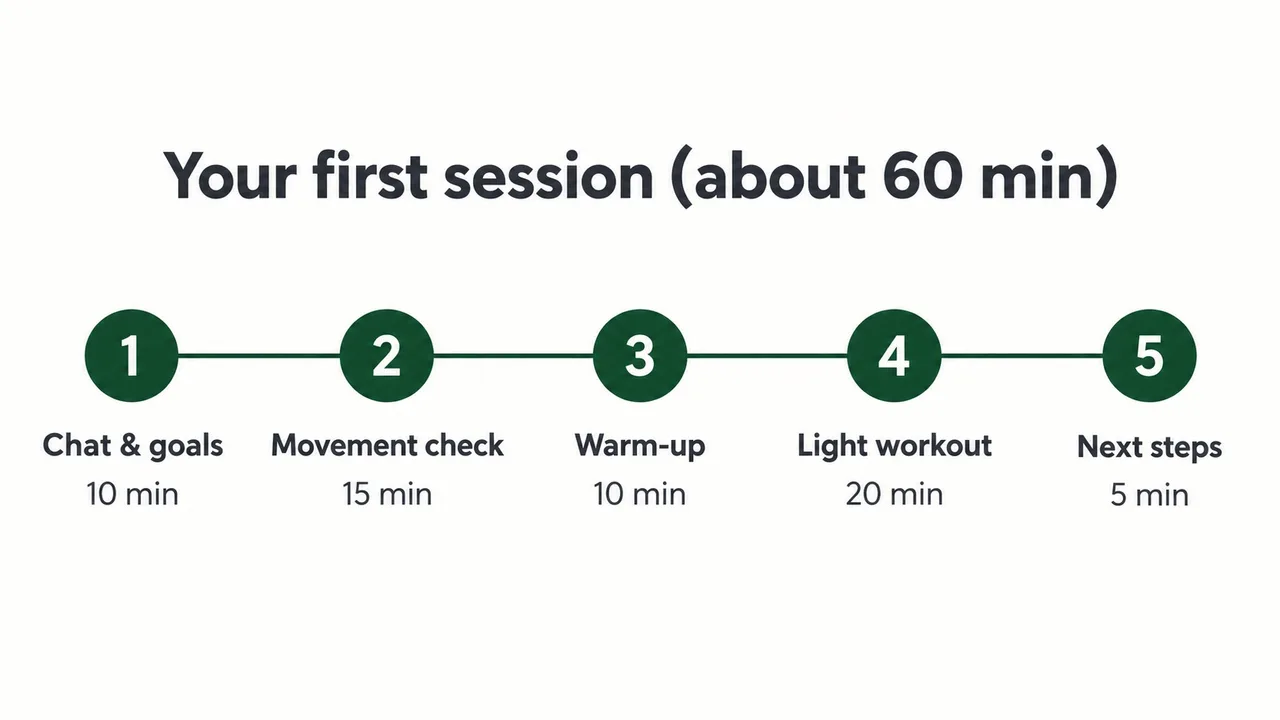
Every trainer runs things a little differently, and session lengths vary (45 to 60 minutes is common). But most first sessions follow a similar shape.
A typical first session. Timings are rough and vary between trainers.
1. A conversation about you
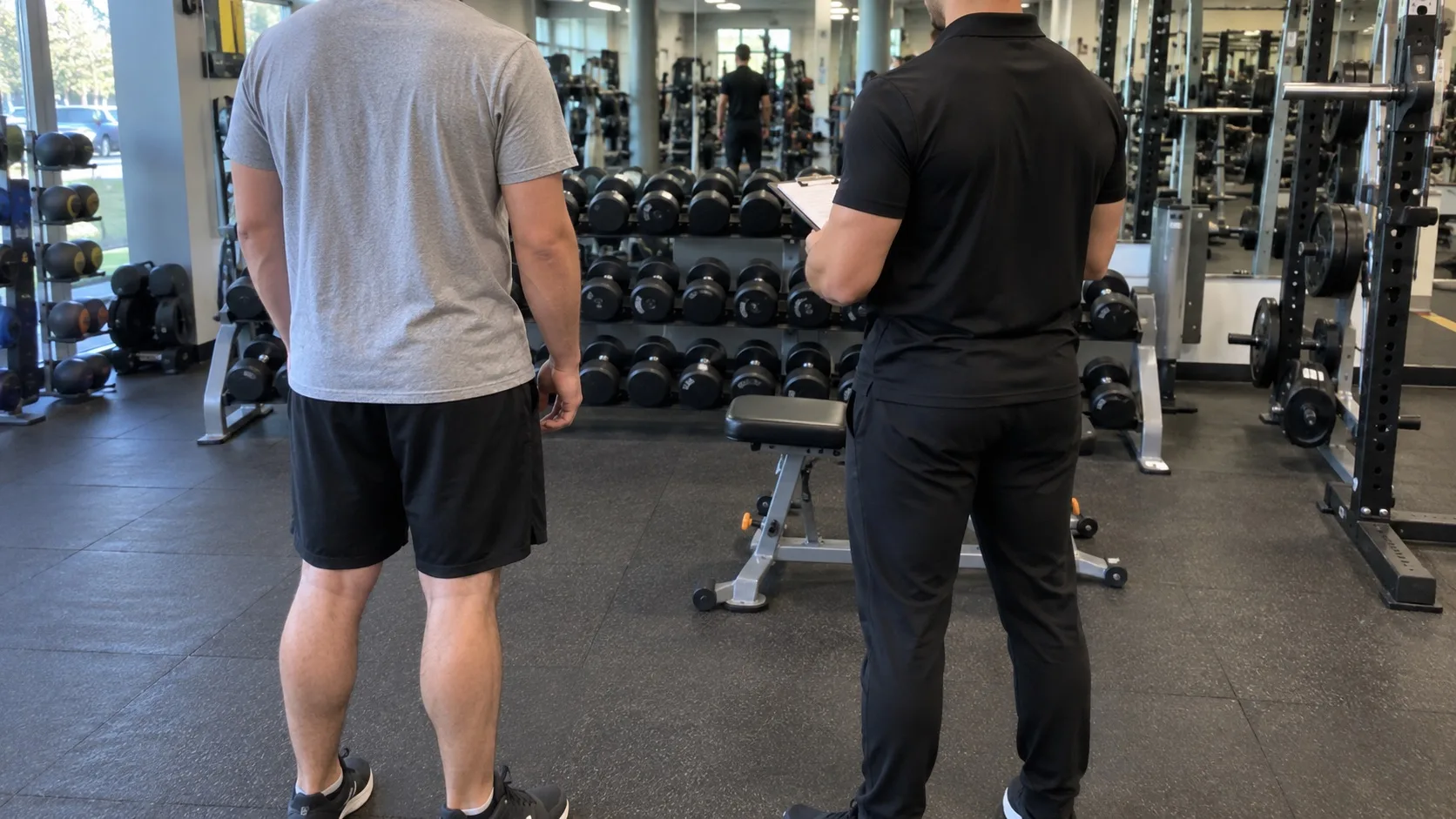
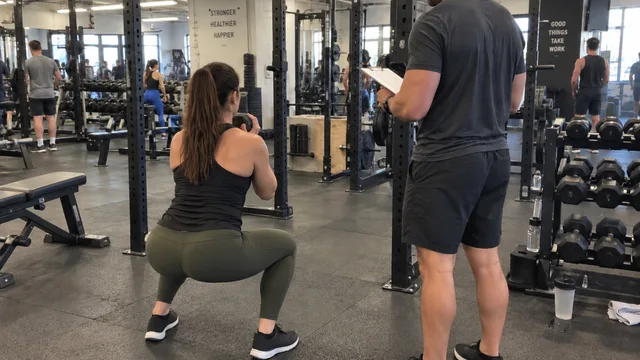
Expect to spend the first part of the session talking, not training. Your trainer will go through your health form, your goals, your training history, your job and daily routine, sleep, stress and how you eat. This is where they figure out what kind of plan will actually fit your life.
Be as specific as you can. "I sit for nine hours a day and my lower back gets stiff by the afternoon" is far more useful than "my back is a bit bad".
2. A movement and posture check
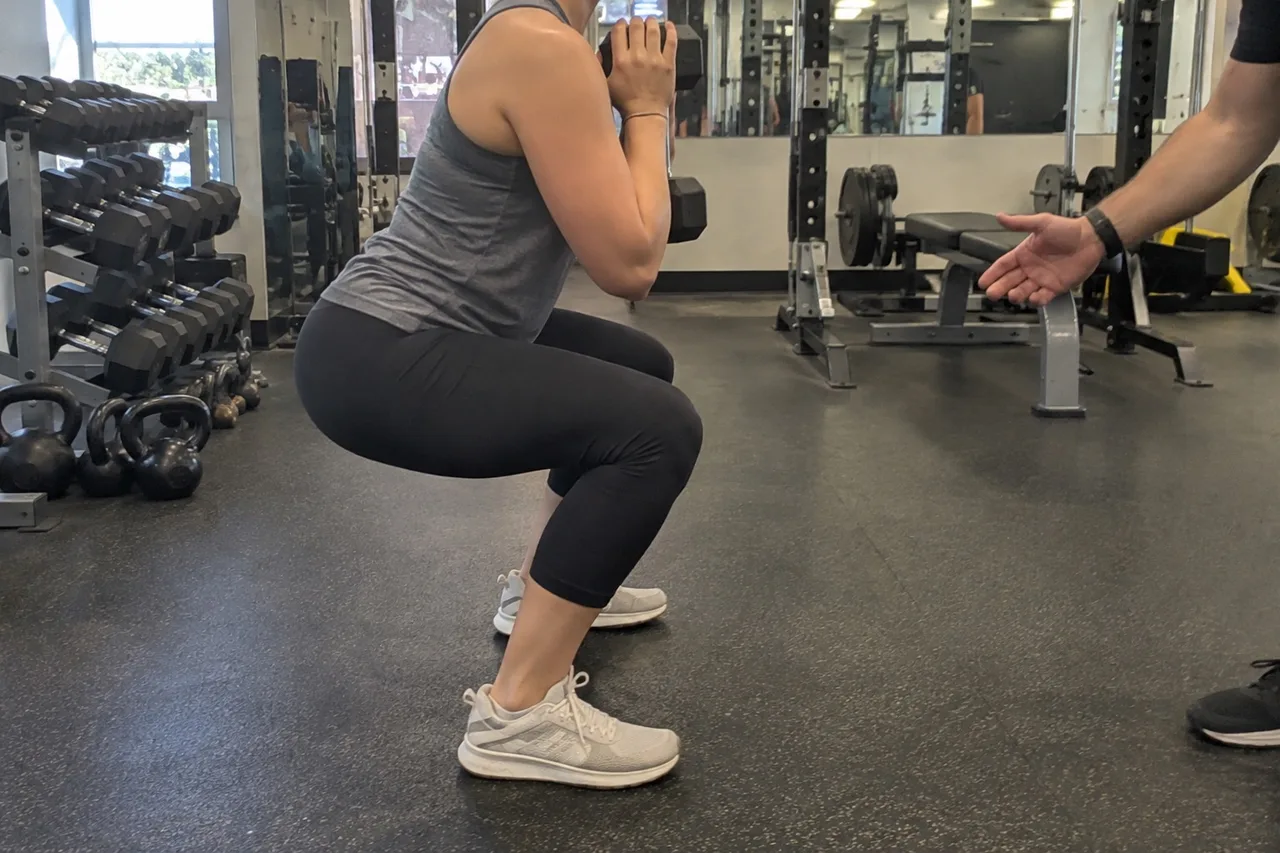
Next, most trainers will watch you do a few basic movements. These aren't tests you can fail. They're a way to see how your body moves today, so the trainer knows where to start and what to adjust. Common examples:
A bodyweight squat, to look at ankle, hip and knee movement.
A lunge or step-up, to check balance and control on one leg.
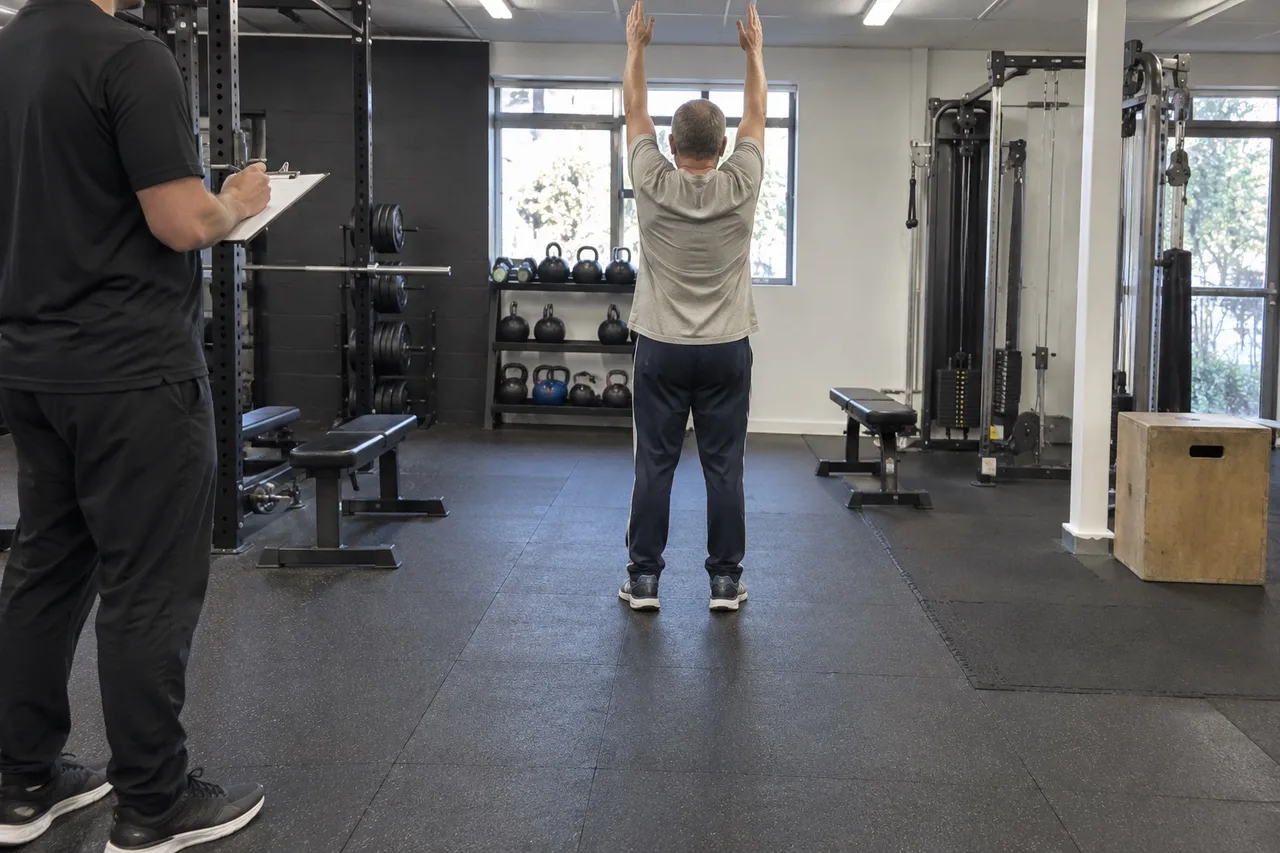
Reaching overhead or a wall test, to see shoulder mobility.
A hinge or toe touch, to look at hamstring and lower back movement.
A plank or push-up variation, to gauge core and upper body strength.
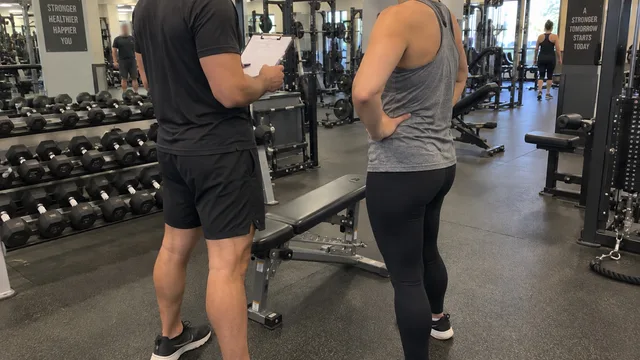
Movement checks show your trainer where to start. There's no pass or fail.
3. Baseline measurements (maybe)
Some trainers take baseline measurements, others skip them or leave them for later. These might include body weight, a few tape measurements, progress photos, resting heart rate or a simple fitness benchmark such as how many push-ups you can do with good form.
All of this is optional. If you don't want to be weighed or photographed, say so. A good trainer will happily track progress in other ways, such as strength, energy or how your clothes fit.
4. A warm-up and a light workout
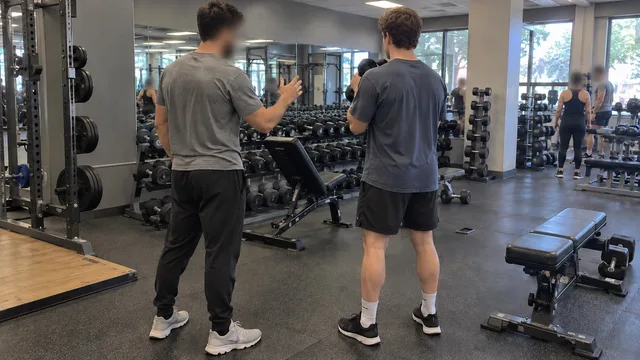
Most first sessions include a short workout. It usually starts with a warm-up, then moves on to a handful of simple exercises: often a squat or leg press variation, a push, a pull, a hinge and some core work. Your trainer will teach the technique, find suitable starting weights and see how you respond.
This is as much about learning as working out. You're getting a feel for the exercises and your trainer is learning how you take instruction, what feels good and what doesn't.
5. A plan for next steps
At the end, your trainer should explain what they've seen and what they recommend: how often to train, what the next few sessions will focus on, and what you can do between sessions. Some trainers will give you a short programme to do on your own, or simple homework like a daily walk or tracking your meals.
How hard will the first session be?
It should feel like proper work, but you shouldn't leave exhausted, dizzy or nauseous. Most trainers keep the first session at a moderate effort on purpose. They don't yet know how you'll recover, and their main goals are to teach good technique and make you want to come back.
A useful way to think about effort is on a scale of 1 to 10. For a first session, most of the work should feel around a 5 to 7: you're breathing harder and the last few reps take some effort, but you could still talk in short sentences and do a couple more reps if you had to.
If a trainer pushes you to the point of feeling sick in your very first session, that's a red flag, not a sign of a good workout. Our guide on how to choose a personal trainer covers other things to look for.
Be honest about injuries and pain
This is the most important thing you can do in your first session. Mention any current pain, past injuries, surgeries or conditions, even if they seem minor or happened years ago. Your trainer can work around almost anything, but only if they know about it.
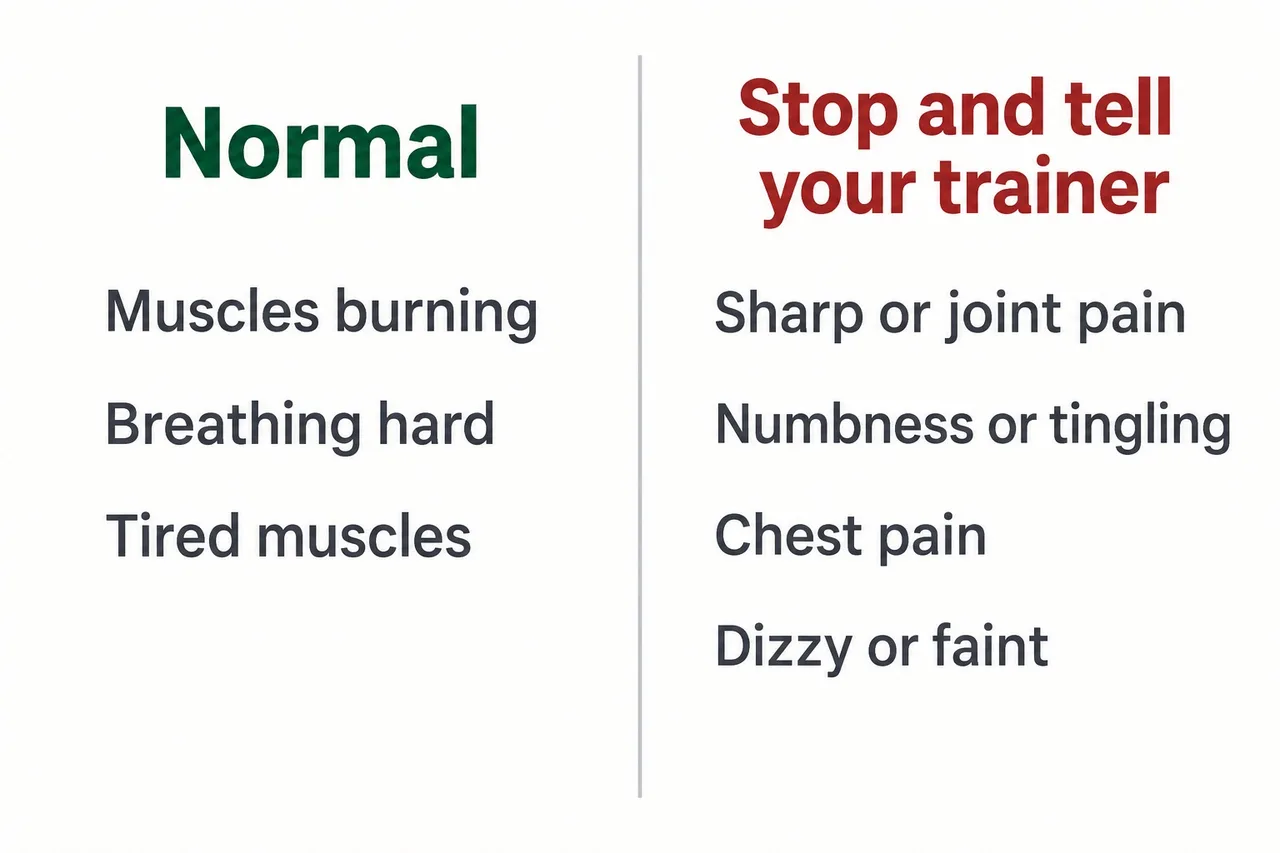
Training discomfort is expected. These warning signs are not.
During the session, speak up if something hurts. Normal training discomfort, such as muscles burning or feeling tired, is fine. Sharp, pinching or joint pain, numbness, tingling, chest pain, or feeling faint is not. Stop and tell your trainer straight away. Most exercises have an easier or different version that will work for you.
Soreness afterwards (DOMS)
It's common to feel stiff and sore for a day or two after your first session. This is called DOMS (delayed onset muscle soreness). It usually starts 12 to 24 hours after training, peaks around 24 to 72 hours, and then fades on its own. It happens most when you do new movements or work muscles in a way they aren't used to, which describes almost every first session.
Some soreness is normal and it gets much milder as your body adapts over the following weeks. To feel better in the meantime:
Keep moving gently. A walk or easy bike ride often helps more than resting on the sofa.
Eat a normal meal with some protein and drink water as usual.
Sleep well.
Don't skip your next session just because you're a little stiff. Tell your trainer and they can adjust it.
Soreness is not a measure of how good the workout was. And some symptoms are not normal DOMS: severe pain, significant swelling, pain in a joint rather than a muscle, or very dark urine after training. If you notice any of these, contact a doctor.
Questions to ask at the end of your first session
The end of the session is a good time to check you're on the same page. A few useful questions:
Based on today, what should I focus on first?
How many sessions a week do you recommend, and what should I do on the days in between?
How will we measure progress, and when will we review it?
Is there anything I should avoid, or anything you noticed I should work on?
What should I eat, or is nutrition something you help with?
How do we communicate between sessions, and how quickly do you usually reply?
What is your cancellation and rescheduling policy?
Gym anxiety is very common, especially if you're new to training, coming back after a long break, or worried about being judged. A few things that help:
Your trainer works with beginners all the time. Not knowing how to do an exercise is the reason you hired them.
Tell them you're nervous. It helps them pace the session and explain things more clearly.
Ask for a quieter time or space if the gym floor feels overwhelming. Many trainers can schedule outside peak hours.
Arrive 10 minutes early so you're not rushing, and can find the changing rooms and water fountain.
Focus on showing up, not performing. The first session is a starting point, not a test.
If past attempts at the gym have fizzled out, our article on why you keep quitting the gym looks at the common reasons and how to get around them.
Finding the right trainer for you
The first session is also your chance to decide whether this trainer suits you. Do they listen? Do they explain why you're doing each exercise? Do you feel safe and respected? If the answer is no, it's fine to try someone else.
If you're still looking, you can browse personal trainers on trainer.sg and compare their specialties, experience and training locations before you book.
FAQ
What should I expect at my first personal training session?
Expect a conversation about your health, goals and routine, a few simple movement checks, possibly some baseline measurements, a light workout to learn key exercises, and a plan for your next sessions. It usually lasts 45 to 60 minutes.
Should I eat before my first personal training session?
Yes, ideally. A normal meal 2 to 3 hours before, or a small snack like a banana 30 to 60 minutes before, works for most people. Avoid a large or greasy meal right before training.
What should I wear to my first personal training session?
Comfortable training clothes you can move freely in, and flat, stable trainers. Bring a water bottle and a small towel.
Will I be sore after my first personal training session?
Probably a little. Muscle soreness (DOMS) often appears 12 to 24 hours later and peaks within one to three days. Gentle movement, sleep and normal eating help, and it gets milder as your body adapts.
Is the first personal training session free?
It depends on the trainer. Some offer a free or discounted first session or consultation, while others charge their normal rate. Ask before you book so there are no surprises.
What if I'm really unfit?
That's exactly who personal training is for. A good trainer will start where you are and adjust every exercise to your level. You don't need to get fit before you start working with a trainer.
How many sessions do I need to see results?
Most people notice they feel stronger and more confident within a few weeks of consistent training. Visible changes usually take longer, often two to three months, and depend on how often you train, your nutrition and your sleep.
·9 min read
How Much Does a Personal Trainer Cost? Prices, Packages and Value
What personal training really costs across sessions, packages, monthly coaching, online coaching and small groups, what drives the price, the hidden costs, and how many sessions you actually need.