How Much Does a Personal Trainer Cost? Pricing Guide | Trainer.sg
How Much Does a Personal Trainer Cost? Prices, Packages and Value
What personal training really costs across sessions, packages, monthly coaching, online coaching and small groups, what drives the price, the hidden costs, and how many sessions you actually need.
How much does a personal trainer cost? The honest answer is that it depends on how you train, who you train with and how often. One-to-one sessions with an experienced coach are the most expensive way to be coached, while online coaching or small-group training can cost a fraction as much per hour. What matters more than the headline price is what you get for it and how long you actually need it.
This guide breaks down the main pricing models, what pushes the price up or down, the costs people forget to budget for, and how to get real value from every session you pay for.
The short answer
One-to-one sessions are the most expensive option per hour, and the most hands-on.
Packages lower the per-session price, usually in exchange for paying upfront and using the sessions within a set period.
Semi-private and small-group training splits the cost between two to six people.
Online coaching is usually billed monthly and costs much less than in-person training, because you train on your own between check-ins.
Most people do not need a trainer forever. A focused block of a few months, followed by less frequent check-ins, is often the best value.
Personal trainer cost by pricing model
Trainers and gyms package their time in a few standard ways. Knowing how each one works makes it much easier to compare offers that look different on paper.
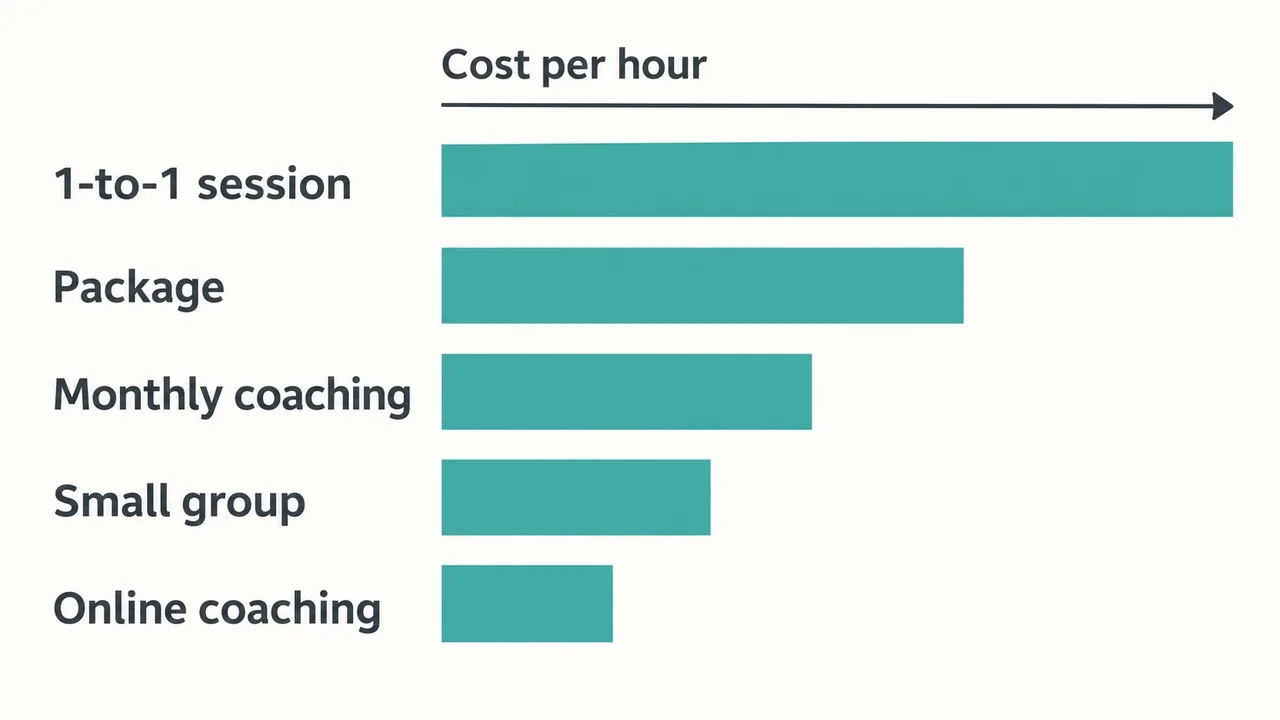
Cost per hour falls as you share the trainer or train more independently.
Pay per session
You pay for each session as you go. This is the most flexible option and the most expensive per session. It suits a trial session, an occasional technique check, or anyone who is not sure yet whether they want to commit.
Buying 10, 20 or more sessions at once usually brings the per-session price down. Before you pay, check the expiry date, the cancellation and rescheduling policy, whether unused sessions are refundable, and whether you are tied to one trainer if they leave the gym. A big discount is not a saving if half the sessions expire unused.
Monthly coaching
Some trainers charge a flat monthly fee that covers a set number of sessions plus programming, messaging support and progress check-ins. This often works out well if you want structure between sessions, not just someone to count reps.
Online coaching
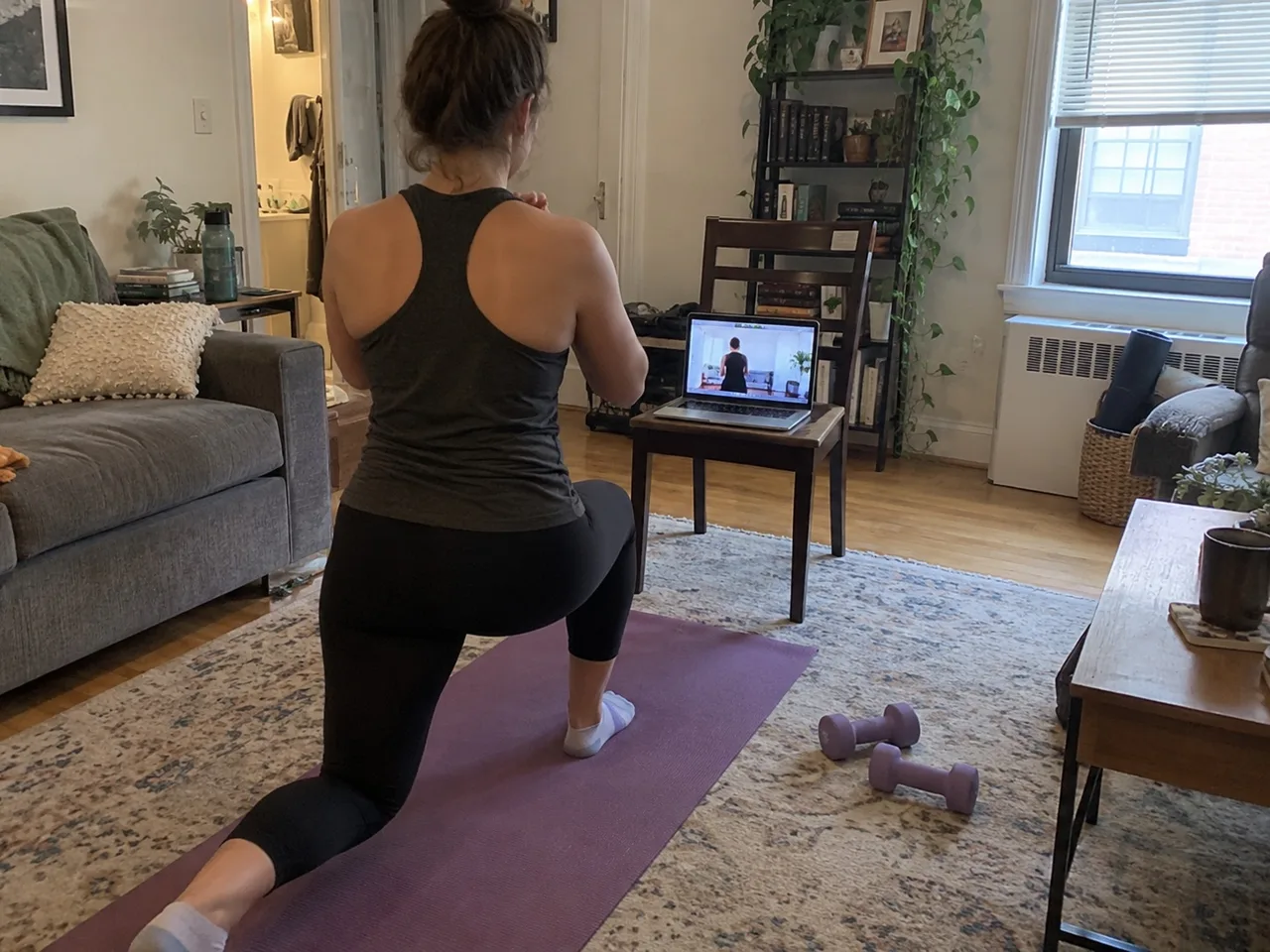
An online coach writes your programme, reviews videos of your lifts, adjusts the plan based on your check-ins and keeps you accountable, without being there in person. It costs much less than in-person training. It works best for people who already know their way around a gym and mainly need a plan, feedback and accountability.
Semi-private and small-group training
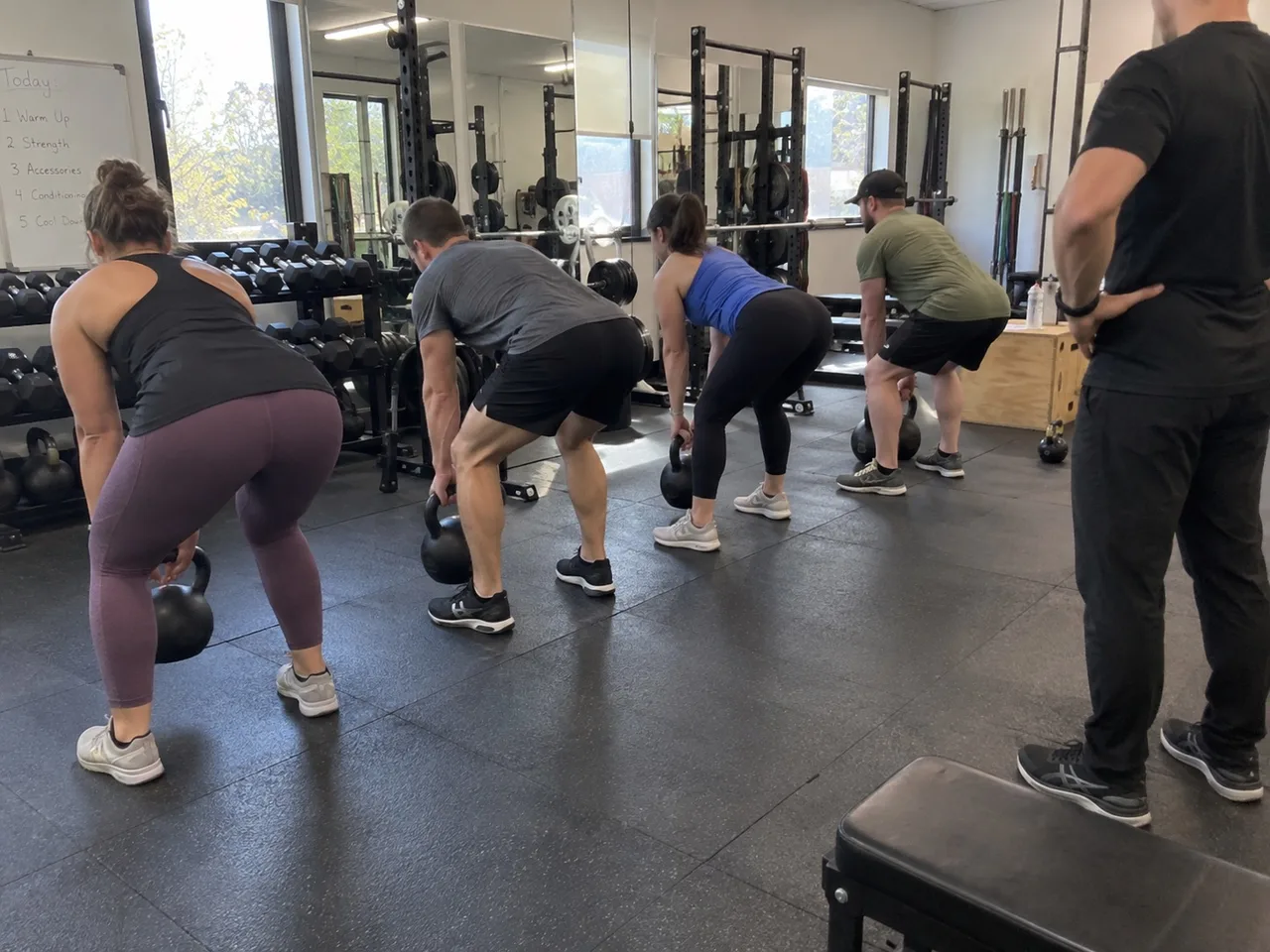
Training with a partner or a small group means you share the trainer and the cost. You get less individual attention, but still get coached technique and a structured plan. Many people find the social side helps them show up.
Model
Relative cost
Best for
Trade-off
Pay per session
Highest per hour
Trying a trainer, occasional form checks
Easy to drift without a plan
Session package
Lower per session
A committed block of training
Upfront payment, expiry dates
Monthly coaching
Varies with sessions included
Structure and support between sessions
Ongoing commitment
Small group / semi-private
Lower per person
Budget-conscious beginners, training with a friend
Less individual attention
Online coaching
Lowest of the coached options
Independent gym-goers who want a plan and feedback
No hands-on correction in the moment
Typical personal trainer prices in Singapore
Trainer.sg is based in Singapore, so here is an indicative guide to one-to-one session prices there. These ranges are drawn from published gym and trainer rates as of late 2026. Prices change often, many advertised rates are promotions, and gym membership is usually charged separately, so always confirm current pricing with the trainer.
Trainer tier (Singapore)
Typical price per 1-to-1 session (SGD)
Newer or freelance trainers
About S$60 to S$90
Experienced trainers at commercial gyms
About S$90 to S$150
Specialists, private studios and hotel gyms
About S$150 to S$250 or more
Package deals and small-group sessions typically bring the per-person price below these figures. Outside Singapore, the same pattern holds: newer trainers sit at the lower end, specialists and premium venues at the top.
What drives the price of a personal trainer
Experience and track record. Trainers with years of results, especially with clients like you, charge more. You are paying for fewer mistakes and better judgement.
Credentials. A recognised personal training certification is the baseline. Degrees in exercise science, strength and conditioning qualifications, or clinical backgrounds such as physiotherapy usually raise the rate.
Specialisation. Coaching for pre- and postnatal clients, older adults, injury rehabilitation, powerlifting or sport performance is more specialised and usually priced higher.
Where they train. Big-gym trainers often have prices set by the gym, which takes a share. Independent trainers set their own rates and may train you in a private studio, an outdoor space or your home. Home visits add travel time, which is usually reflected in the price.
Session length. Sessions of 30, 45 and 60 minutes are all common. A shorter session is cheaper, but check the price per minute, not just the headline number.
Demand and schedule. Early mornings, evenings and weekends are the busiest slots. Some trainers charge more for them or have waitlists.
A higher price does not guarantee a better trainer. Look for someone who asks about your goals, history and schedule before they talk about packages. Our guide on how to choose a personal trainer covers what to look for.
Hidden costs to budget for
The session price is rarely the whole bill. Ask about these before you sign up:
Gym access. Many gyms require you to hold a membership on top of personal training fees. Some independent trainers also pay a facility fee to train clients in a gym, which may be passed on to you.
Initial assessments. Some trainers charge for a first consultation, movement screen or body composition test. Others include it free.
Joining or admin fees on gym-based packages.
Cancellation penalties. Late cancellations are usually charged as a full session.
Equipment and extras. Home training may need some basic equipment. Nutrition plans, apps or supplements are sometimes sold as add-ons. None of these are required to make progress.
How many sessions do you actually need?
There is no single number, but most people get the most value from a front-loaded approach. You need the most coaching when you are learning technique and building a routine, and less once you can train confidently on your own.
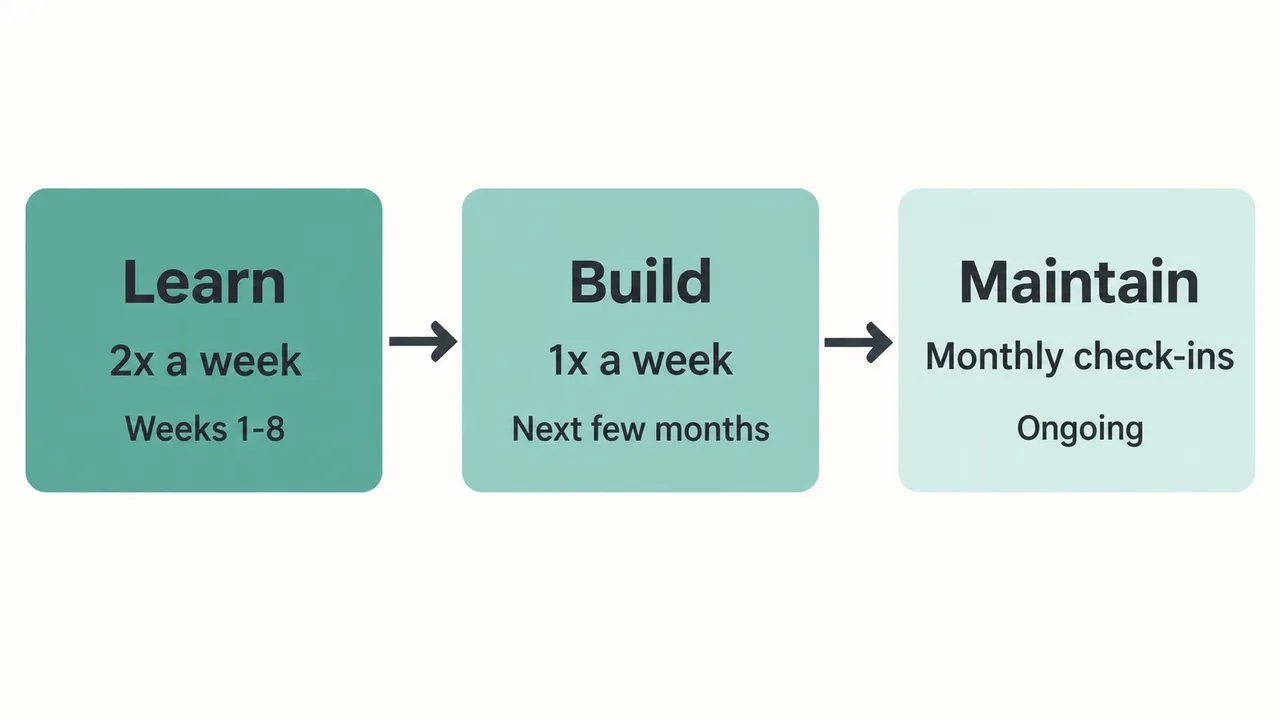
A typical way to taper coaching as your confidence grows.
Learn (roughly the first 1 to 2 months). One or two sessions a week to learn the main lifts, set up a programme and build the habit.
Build (the next few months). One session a week, or every other week, to progress the programme and check technique. You do the other workouts on your own.
Maintain (ongoing, optional). A monthly session, or online check-ins, to update the plan and stay accountable.
Beginners often see clear progress in strength and confidence within the first two to three months of consistent training. For context, the World Health Organization recommends adults do at least 150 to 300 minutes of moderate activity a week plus muscle-strengthening work on two or more days, so sessions with a trainer should sit inside a bigger weekly routine, not replace it. A simple beginner gym workout plan is a good thing to ask your trainer to help you run between sessions.
If you have a heart condition, high blood pressure, a recent injury, are pregnant or are returning to exercise after a long break, check with your doctor before starting and tell your trainer about it.
How to get the most value from a trainer
Set one clear goal. "Squat with good form", "lose 5 kg" or "run 5 km without stopping" gives every session a purpose.
Ask for a written programme. You should leave knowing exactly what to do on the days you train alone.
Train between sessions. One hour a week with a coach will not change much on its own. The workouts you do alone are where most progress comes from.
Track your training and food. Logging your sessions and meals gives your trainer real data to adjust from. Our guide on how many calories you should eat explains the basics.
Learn, do not just follow. Ask why each exercise is in your plan. The goal is to need your trainer less over time.
Review progress every 4 to 6 weeks. If you are not moving towards your goal, change the plan or the trainer.
If you keep starting and stopping, the problem is usually the routine rather than the trainer. Why you keep quitting the gym looks at the most common reasons.
Cheaper alternatives to one-to-one personal training
Online coaching swaps in-person sessions for a programme, video feedback and regular check-ins.
Online coaching for a personalised programme and feedback at a much lower cost.
Semi-private training with a friend or partner to split the price.
Small-group classes in strength, conditioning or mobility, which teach technique in a structured setting.
A short block of sessions to learn the basics, then training on your own with periodic check-ins.
A well-designed free programme combined with careful video review of your own lifts, if you are confident and self-motivated.
Small-group training shares the cost and keeps the coaching.
On Trainer.sg you can browse trainers and coaches, compare what they offer, including in-person and online coaching, and message them directly before committing to anything. If you are still deciding whether to hire someone at all, read is a personal trainer worth it?
FAQ
How much does a personal trainer cost per session?
It varies widely with experience, location and session length. Newer trainers and group sessions sit at the lower end, while experienced specialists and premium venues charge the most. In Singapore, one-to-one sessions typically range from about S$60 to S$250 or more, with most experienced gym trainers somewhere in the middle.
Is it cheaper to buy a personal training package?
Usually, yes. Packages lower the price per session, but you pay upfront and the sessions often expire. Only buy as many as you can realistically use in the time allowed, and read the cancellation and refund terms first.
Do I need a gym membership to have a personal trainer?
Often, yes, if you train at a commercial gym. Many gyms require clients to be members. Independent trainers who work in private studios, outdoors or at your home may not need you to hold a membership, but their price may include a facility or travel cost.
How often should I see a personal trainer?
One or two sessions a week is common when you are starting out. Once you know your programme and can train safely on your own, many people drop to weekly, fortnightly or monthly sessions.
Is online coaching as good as in-person training?
For people who already know the basic lifts, online coaching can work very well and costs much less. Complete beginners, people recovering from injury, or anyone who needs hands-on technique correction usually benefit from at least some in-person sessions first.
What should I ask a trainer before paying?
Ask about their qualifications, experience with goals like yours, what a typical session and programme look like, how they track progress, and the full cost including gym access, assessments, cancellation rules and package expiry. Our guide to your first personal training session covers what to expect next.
The bottom line
A personal trainer is an investment in learning to train well, not a permanent subscription. Pick the pricing model that fits your budget and confidence, budget for the hidden costs, and plan to need less coaching over time. The best-value trainer is the one who leaves you able to keep going on your own.
·11 min read
What to Expect at Your First Personal Training Session
What really happens at a first personal training session: how to prepare, what to wear and bring, the typical structure, how hard it will be, soreness afterwards and the questions to ask before you leave.